Pests
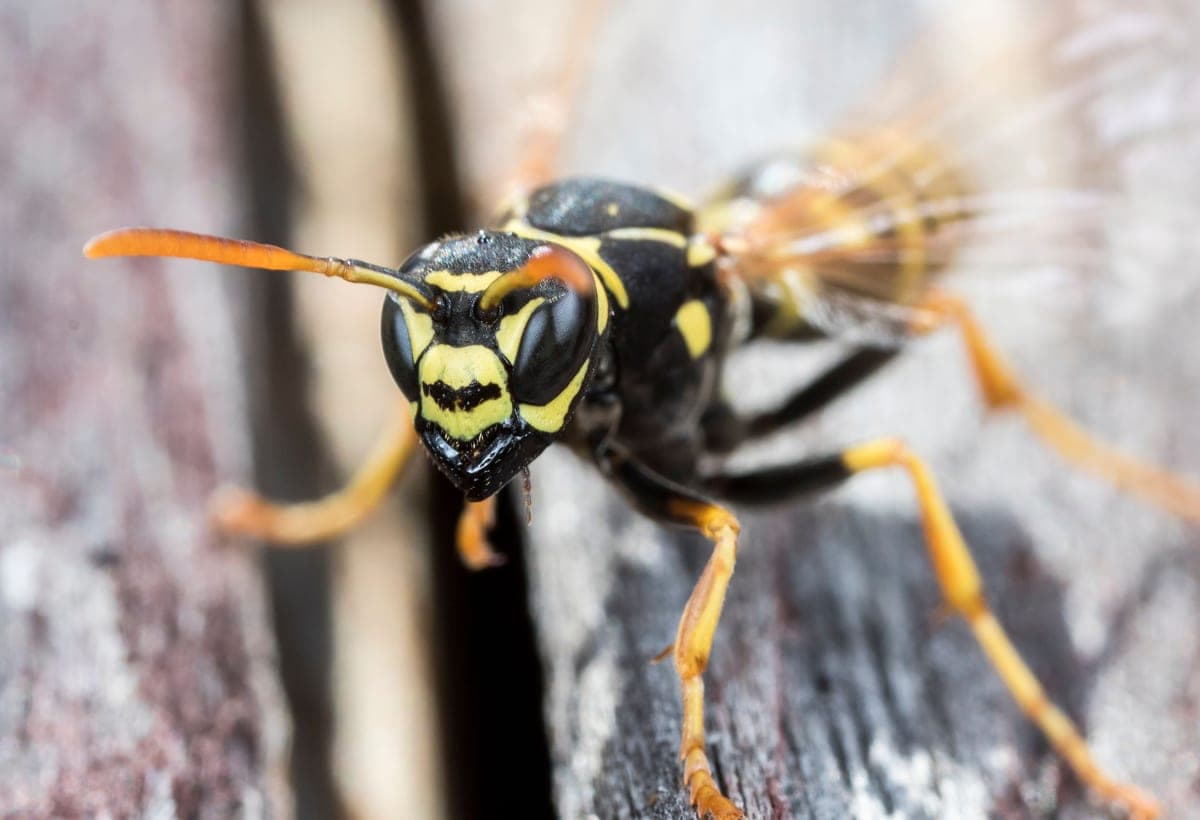
Wasps on a hummingbird feeder
Bees are a nuisance. Wasps will empty a feeder of hummingbirds entirely — and a couple of the standard bee fixes do not transfer.
We earn a commission on purchases made through our links, at no extra cost to you. We don’t accept free products or paid placements. Full disclosure.
Eliminate every drip, wash the outside of the feeder at each refill, and move it several feet — then fit bee guards. Wasps behave differently from honeybees: they are aggressive enough to drive hummingbirds off a feeder completely, and they are drawn to a sugar source as territory rather than just a meal. The mechanical fixes still work, but they need to be more thorough.
What we recommend here
| # | Product | Best for | Score | Price |
|---|---|---|---|---|
| 1 |  Aspects HummZinger Ultra 12 oz Fitted Nectar-Guard tips plus a body that cannot drip | Best against wasps | 9.2 out of 10 | |
| 2 |  Aspects HummZinger HighView 12 oz Nectar below the ports, and nothing spills | The cheaper mechanical fix | 8.6 out of 10 | |
| 3 | No product photo yet Trap-It Ant Moat Wasps and ants often arrive at the same sticky feeder | For the other half of the problem | 8.3 out of 10 |
Scores are our own editorial ratings from the criteria on our methodology page. They are not customer ratings and they are not test results.
Why wasps are a different problem
Honeybees at a feeder are persistent and passive. They are foraging, they mostly ignore the birds, and hummingbirds mostly tolerate them.
Wasps — yellowjackets in particular — are territorial and aggressive. They will actively drive hummingbirds off a feeder, and a hummingbird that has been chased off often stops coming. So a wasp problem is not merely unpleasant; it can cost you the feeder entirely for the rest of the season.
They are also less purely nectar-driven than bees. A wasp is at your feeder for the sugar, but wasps are opportunistic and will keep returning to a known source, which makes the “move the feeder” fix less reliably decisive than it is with bees.
Six fixes
1. Eliminate every drip — and be stricter than you would be for bees
The same root cause as bees but with less tolerance. A saucer feeder cannot drip, which removes the trail entirely. Saucer feeders.
2. Wash the outside of the feeder every refill
Audubon’s point applies with force here: if the feeder is covered in sugar water, barring insects from the drinking hole will not do much good.
3. Fit bee guards
Nectar-Guard tips exclude wasps as effectively as bees — a wasp cannot part a flexible collar that only opens around a bill. Bee-proof feeders.
4. Move the feeder — further than you would for bees
Three or four feet often breaks a bee habit. For wasps, move it further and consider taking it down for two or three days first so the location stops being remembered, then re-hang it somewhere new. Hummingbirds will re-find it; a wasp scouting pattern is more likely to be broken.
5. Check what else in the yard is attracting them
Wasps that are already resident near your feeder usually have a reason: fallen fruit, an open bin, a compost heap, a soda can on the deck. Removing the ambient sugar source matters more with wasps than with bees, because it is what put a colony’s foragers on that part of your yard in the first place.
6. Locate the nest, and get help if it is close
A persistent yellowjacket problem at a feeder usually means a nest within foraging range. Do not attempt to destroy a nest near a feeding station yourself with sprays — that is exactly the pesticide use Audubon warns against, and pesticides can injure, kill and reduce population numbers of birds, bees and other animals. If a nest genuinely needs removing for safety, that is a job for a professional who knows there is a bird feeder nearby.
What not to do, again
No insecticide anywhere near the feeder. No oil or petroleum jelly on or around the ports — it damages feathers. No sticky traps hung next to a feeder, where a hummingbird can reach them.
Sugar-baited wasp traps are sometimes suggested. If you use one, put it a long way from the feeder and be aware you are advertising a sugar source in your yard, which can attract more foragers than it removes.
The honest expectation
Bees can usually be solved outright with a saucer feeder and a wipe. Wasps sometimes cannot, at least not immediately — if a colony has established nearby, you may be managing rather than fixing it until the season turns. Wasp activity drops sharply in fall.
In the meantime, a drip-free guarded feeder in a new location is your best position, and it is the same equipment that solves the bee problem. Related: bees · ants.
Recommended for this
What we’d buy
1. Best against wasps
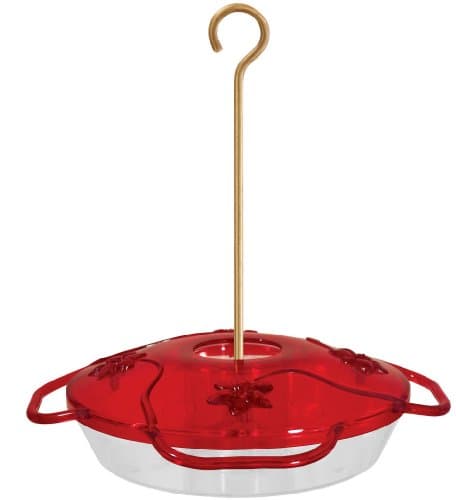
Aspects HummZinger Ultra 12 oz
The same saucer body as the HighView with Nectar-Guard tips fitted to every port — the one design change that physically keeps a bee's tongue out of the nectar instead of merely discouraging it.
- Type
- Saucer (dish)
- Capacity
- 12 oz
- Feeding ports
- 4, with Nectar-Guard tips
- Material
- Polycarbonate, brass hanger
- Dimensions
- 8.25" x 2"
- Ant moat
- Built into the brass hanger
- Cover
- Twist-off
Our score: 9.2/10 — an editorial rating, not a customer rating or a test result.
Cleaning access
Twist-off cover, same open-dish base as the HighView. The one extra step is the Nectar-Guard tips: they are small flexible collars in each port, and sugar residue collects exactly where the tip narrows. Budget an extra thirty seconds and buy a port brush alongside the feeder.
What works
- Nectar-Guard tips are a physical barrier, not a deterrent — the mechanism that actually works on bees
- Brass hanger doubles as the ant moat, so ants and bees are both handled by the stock feeder
- Saucer body means no drip, and drips are what draw insects in the first place
What doesn’t
- The port tips need their own small brush; skip that and they clog
- Same 12 oz capacity as the HighView, so not the answer for a high-traffic yard
- Costs more than the HighView for a feature you only need if you have a bee problem
Price as of October 16, 2026. #ad How we’re funded
Specifications from Duncraft — Aspects HummZinger Ultra and Amazon — Aspects 367 HummZinger Ultra. We have not handled this feeder — here is what we did instead.
2. The cheaper mechanical fix
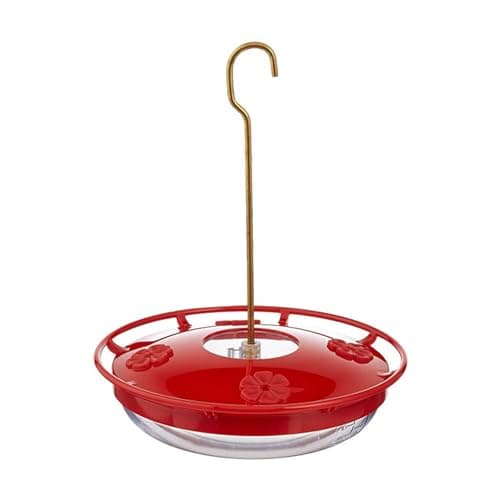
Aspects HummZinger HighView 12 oz
A four-port saucer feeder with the ant moat built into the lid and a cover that lifts straight off — the shortest path from hanging it up to washing it out.
- Type
- Saucer (dish)
- Capacity
- 12 oz
- Feeding ports
- 4
- Material
- Polycarbonate, metal hanger
- Dimensions
- 7.75" x 7.75" x 1.75"
- Ant moat
- Built in
- Perch
- Raised wraparound perch
- Mounting
- Hang or post mount
Our score: 8.6/10 — an editorial rating, not a customer rating or a test result.
Cleaning access
Two parts. The cover lifts off the base with no tools and no threads to cross, and the whole dish is one open bowl — a two-minute wash with a brush and hot water, which is exactly the cadence a nectar feeder needs. The moat is part of the lid, so there is no separate accessory to lose or forget to refill.
What works
- Saucer design puts nectar below the ports, so it does not drip as the air inside warms
- Ant moat is integral to the lid rather than a separate hanging accessory
- Opens to a single shallow bowl — the easiest shape in the category to scrub
- Raised ports shed rain, which keeps the nectar from being diluted
What doesn’t
- 12 oz is small for a busy yard
- Polycarbonate clouds over several seasons in a way glass does not
- No bee-excluding port tips fitted — that is the Ultra's feature, not the HighView's
Specifications from Duncraft — Aspects High View HummZinger and Amazon — Aspects HummZinger HighView 12 oz. We have not handled this feeder — here is what we did instead.
3. For the other half of the problem
Trap-It Ant Moat
A three-quarter-cup water moat that hangs above any feeder. It holds more water than most, which is the only spec that matters — a moat that dries out on a hot afternoon is a bridge.
photo yet
- Type
- Hanging water ant moat
- Water capacity
- 3/4 cup
- Dimensions
- Approx. 3" diameter x 3.5" tall including hooks
- Material
- One-piece weather-resistant plastic
- Hooks
- Open eye hooks top and bottom, 3/8 in diameter
- Colors
- Red, orange
Our score: 8.3/10 — an editorial rating, not a customer rating or a test result.
Cleaning access
One open cup. Tip it out, rinse it, refill with plain water when you refill the feeder — conveniently the same visit.
What works
- Larger water capacity than most moats, so it survives a hot day without going dry
- Open hooks top and bottom fit almost any hanging feeder
- One piece of plastic — nothing to break or lose
What doesn’t
- Does nothing whatsoever for bees or wasps; that is a port-size problem
- Needs topping up, and an empty moat is worse than none because you stop checking
- Only useful on a hanging feeder — a pole-mounted feeder needs a different answer
Specifications from Duncraft — Trap-It Ant Moat. We have not handled this feeder — here is what we did instead.
Common questions
Frequently asked
How do I get rid of wasps on my hummingbird feeder?
Eliminate every drip by switching to a saucer feeder, wash the outside at every refill, fit bee guards, and move the feeder — further than you would for bees, ideally after taking it down for a couple of days.
Are wasps dangerous to hummingbirds?
They will aggressively drive hummingbirds off a feeder, and a bird that has been chased off repeatedly often stops visiting. That is the main cost — losing the feeder for the season.
Do bee guards work on wasps?
Yes. A fitted Nectar-Guard tip is a physical barrier that only opens around a bill, so a wasp cannot get through it any more than a bee can.
Should I spray a wasp nest near my feeder?
Not yourself, and not with anything near the feeder. Audubon warns that pesticides can injure, kill and reduce population numbers of birds, bees and other animals. If a nest must be removed, use a professional and tell them the feeder is there.
Sources
Where this came from
Read next
Related reading
By Scooter M.
an enthusiast who's genuinely into this. I read the manuals, compile the published specs, and do the math. No lab coat.
Published September 1, 2026