Migration
When to put hummingbird feeders out
A week or two before the first arrivals, which means March in the South and late April in the North. Early costs you nothing; late costs you the first birds.
We earn a commission on purchases made through our links, at no extra cost to you. We don’t accept free products or paid placements. Full disclosure.
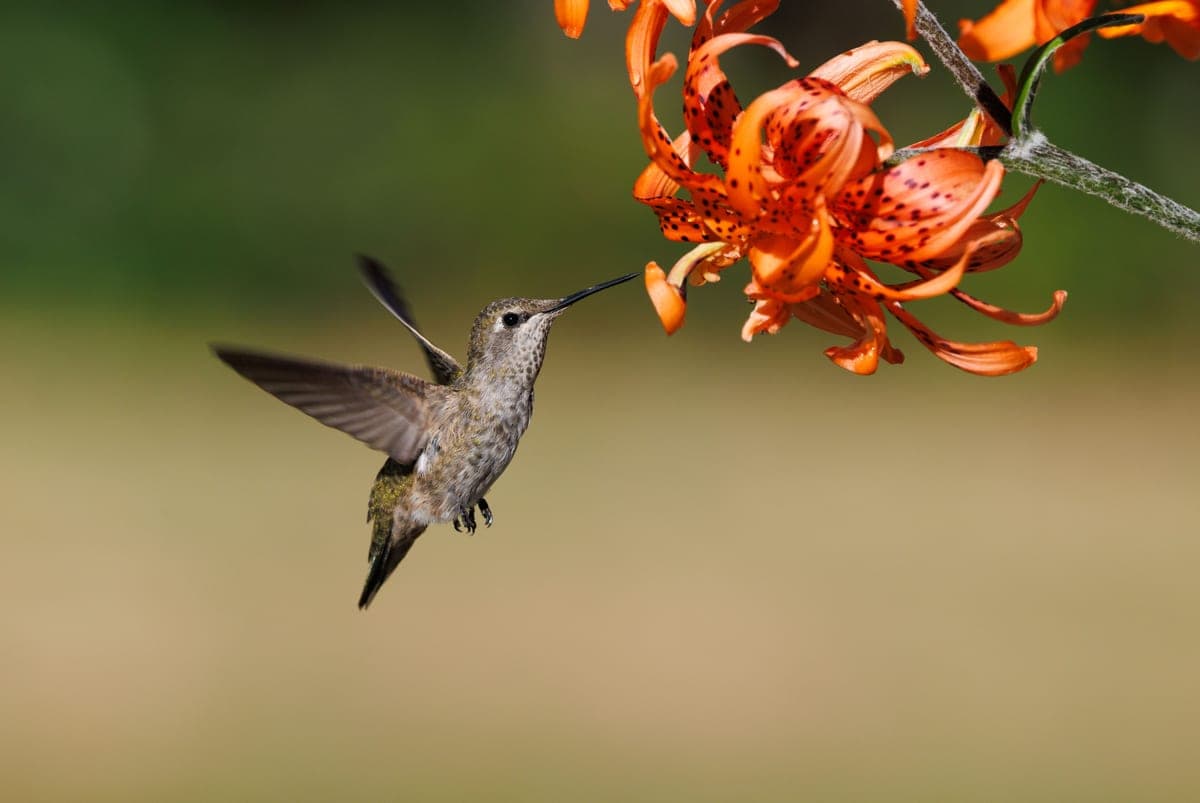
Put your feeder out about a week or two before hummingbirds normally arrive where you live. Audubon’s guidance is concrete: early March if you live in the Southeast, and late April if you live in the Northeast. Ruby-throated Hummingbirds arrive in numbers along the Gulf Coast by early March and filter northward over the next two months, reaching northern states and southern Canadian provinces by late April or early May.
What we recommend here
| # | Product | Best for | Score | Price |
|---|---|---|---|---|
| 1 |  Aspects HummZinger HighView 12 oz Small, quick to clean, and does not drip in early-spring rain | The one to have hanging in March | 9.0 out of 10 | |
| 2 | No product photo yet Aspects Jewel Box Window Feeder 8 oz 8 oz, so a slow first fortnight does not waste nectar | Best for a quiet early season | 8.5 out of 10 | |
| 3 | No product photo yet Hummingbird Feeder Brush Kit (3-piece) Last year's residue is still in the ports | For the feeder that has been in the shed | 8.4 out of 10 |
Scores are our own editorial ratings from the criteria on our methodology page. They are not customer ratings and they are not test results.
Regional timing
| Region | Typical first arrivals | Hang the feeder |
|---|---|---|
| Gulf Coast and Deep South | Early March | Late February |
| Southeast | March | Early March |
| Mid-Atlantic and Midwest | Through April | Early to mid April |
| Northeast and Upper Midwest | Late April to early May | Late April |
| Southwest / Mexican border | Early March | Late February |
| Northern Rockies | Early to mid May | Late April to early May |
| Pacific Northwest (Rufous) | As far north as Oregon by end of February | Mid February |
| Coastal California (Anna’s, Allen’s) | Year-round residents | Keep one up all year |
Two details from Audubon worth knowing. Migrating males usually arrive a week or so before females at any given location, so your first sighting is likely to be a male. And in the Mountain West, Broad-tailed, Black-chinned and Calliope hummingbirds appear near the Mexican border from early March and reach the northern Rockies by early to mid May.
Regional detail, including what to watch for as the front moves, is on arrival windows by region.
Why early beats late
The asymmetry is the whole argument. Hanging a feeder two weeks early costs you a couple of nectar changes on an empty feeder — a few cents and four minutes. Hanging it two weeks late means the first arrivals pass through a yard with nothing in it, at exactly the point in the year when they most need fuel and when natural nectar is scarcest.
Early-season birds are also the ones most likely to become residents. A hummingbird that finds food in your yard in March is a hummingbird that comes back in April.
Getting the feeder ready
If it has been in the shed since fall, do not just fill it.
- Take it fully apart and wash everything, including inside every port with a port brush. Residue survives a winter.
- Check the ports and gasket for cracks. UV makes them brittle and a season in storage does not help. Feeder parts.
- Fill the ant moat with fresh water, and check it is not cracked.
- Fill it shallow. Early season is quiet, so a part-fill wastes less at each change. Capacity is a maximum, not an instruction — sizing.
Early-season nectar management
The good news: cool spring weather slows fermentation, so the change interval sits at the longer end — every four to five days rather than daily. The schedule still applies, it is just gentler. The cadence.
Two spring-specific things. Rain dilutes nectar, so empty and refill a rained-into feeder rather than topping it up. And a hard late frost can freeze the nectar — if you get one, bring the feeder in overnight and put it back out at first light, because that is when the birds feed.
Recipe is unchanged year round: four parts water to one part plain white sugar. The recipe.
Nobody has arrived — is something wrong?
Usually not. A new feeder takes two to four weeks to be found even in season, and in early spring you may simply be ahead of the front. Keep the nectar fresh and give it a month.
If you are well into the season with nothing, work through why hummingbirds are not coming to your feeder — the answer is usually spoiled nectar, placement, or a dominant bird holding the feeder.
Recommended for this
What we’d buy
1. The one to have hanging in March
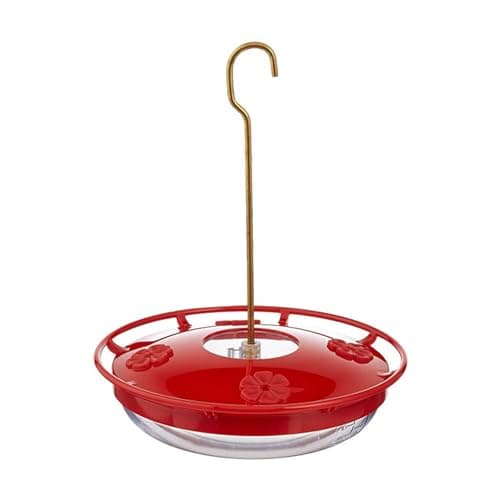
Aspects HummZinger HighView 12 oz
A four-port saucer feeder with the ant moat built into the lid and a cover that lifts straight off — the shortest path from hanging it up to washing it out.
- Type
- Saucer (dish)
- Capacity
- 12 oz
- Feeding ports
- 4
- Material
- Polycarbonate, metal hanger
- Dimensions
- 7.75" x 7.75" x 1.75"
- Ant moat
- Built in
- Perch
- Raised wraparound perch
- Mounting
- Hang or post mount
Our score: 9.0/10 — an editorial rating, not a customer rating or a test result.
Cleaning access
Two parts. The cover lifts off the base with no tools and no threads to cross, and the whole dish is one open bowl — a two-minute wash with a brush and hot water, which is exactly the cadence a nectar feeder needs. The moat is part of the lid, so there is no separate accessory to lose or forget to refill.
What works
- Saucer design puts nectar below the ports, so it does not drip as the air inside warms
- Ant moat is integral to the lid rather than a separate hanging accessory
- Opens to a single shallow bowl — the easiest shape in the category to scrub
- Raised ports shed rain, which keeps the nectar from being diluted
What doesn’t
- 12 oz is small for a busy yard
- Polycarbonate clouds over several seasons in a way glass does not
- No bee-excluding port tips fitted — that is the Ultra's feature, not the HighView's
Specifications from Duncraft — Aspects High View HummZinger and Amazon — Aspects HummZinger HighView 12 oz. We have not handled this feeder — here is what we did instead.
2. Best for a quiet early season
Aspects Jewel Box Window Feeder 8 oz
The saucer logic applied to a window: 8 oz, three ports, a hinged lid you flip open to fill, a detachable ant moat, and a lifetime guarantee behind it.
photo yet
- Type
- Window mount, saucer
- Capacity
- 8 oz
- Feeding ports
- 3
- Material
- Polycarbonate
- Dimensions
- 8.5"L x 6"W x 2.2"H
- Mounting
- Suction-cup bracket; deck-mount hardware included
- Ant moat
- Detachable
- Ports
- Accepts optional Nectar-Guard tips
- Guarantee
- Lifetime guarantee (Aspects)
Our score: 8.5/10 — an editorial rating, not a customer rating or a test result.
Cleaning access
The best cleaning story of any window feeder here. The hinged lid opens for filling without unmounting anything, and the body is a shallow dish rather than a bottle — so the weekly wash is one bowl and three ports, not a reservoir you cannot see into.
What works
- Hinged lid means refilling does not involve taking it off the window
- Shallow dish shape is the easiest thing in the category to actually clean
- Accepts optional Nectar-Guard tips, so the bee fix is available if you need it
- Deck-mount hardware included if the suction cups disappoint you
What doesn’t
- 8 oz, and only three ports
- Nectar-Guard tips are an optional extra, not fitted
- Suction cups on a hot south-facing window are still suction cups
Specifications from Duncraft — Aspects Jewel Box Window Hummingbird Feeder. We have not handled this feeder — here is what we did instead.
3. For the feeder that has been in the shed
Hummingbird Feeder Brush Kit (3-piece)
A bottle brush, a socket brush and a thin port brush. The port brush is the one that matters — it is the only thing that reaches inside a flower port, and a flower port is where mold starts.
photo yet
- Bottle brush
- Typically 13.5" long, 1.5" bristle diameter
- Socket brush
- Typically 8" long, 1" bristle diameter
- Port brush
- Typically 8.25" long, sized for feeding ports
- Bristles
- Nylon — non-scratching on glass and plastic
Our score: 8.4/10 — an editorial rating, not a customer rating or a test result.
Cleaning access
Rinse the brushes when you rinse the feeder and stand them up to dry. A brush stored wet in a drawer grows its own problem.
What works
- The port brush reaches the one surface a sponge and a stream of water never will
- Nylon bristles will not scratch polycarbonate, which is what makes it cloud
- Cheap enough that there is no argument for not owning one
What doesn’t
- Kit contents vary by seller — check the port brush is actually included
- A 13.5" bottle brush will not reach the bottom of a tall 32 oz reservoir
- Bristles wear out; a splayed brush stops reaching into ports
Specifications from Duncraft — Nectar Brush Set and Blue Bird Landing — Hummingbird Feeder Cleaning Brush 3-Piece Kit. We have not handled this feeder — here is what we did instead.
Common questions
Frequently asked
When should I put my hummingbird feeder out?
A week or two before hummingbirds normally arrive where you live. Audubon suggests early March in the Southeast and late April in the Northeast.
Is it bad to put a hummingbird feeder out too early?
No. The cost is a couple of nectar changes on an empty feeder. The cost of being late is that the first arrivals find nothing, at the point in the year when natural nectar is scarcest.
When do hummingbirds arrive on the Gulf Coast?
Ruby-throated Hummingbirds arrive in numbers along the Gulf Coast by early March, then filter northward over the following two months.
Do I need to take my feeder down at all in California?
On the coast, often not — Anna’s and Allen’s hummingbirds are year-round residents there, so a feeder kept clean and filled all year is genuinely useful.
Do males arrive before females?
Yes — Audubon notes that migrating males usually arrive a week or so before females at any given location, so your first sighting is likely to be a male.
Sources
Where this came from
Read next
Related reading
By Scooter M.
an enthusiast who's genuinely into this. I read the manuals, compile the published specs, and do the math. No lab coat.
Published September 1, 2026