Pests
Keeping ants out of a hummingbird feeder
One mechanism, and it is close to a hundred percent effective. Almost all the failures are the same four mistakes.
We earn a commission on purchases made through our links, at no extra cost to you. We don’t accept free products or paid placements. Full disclosure.
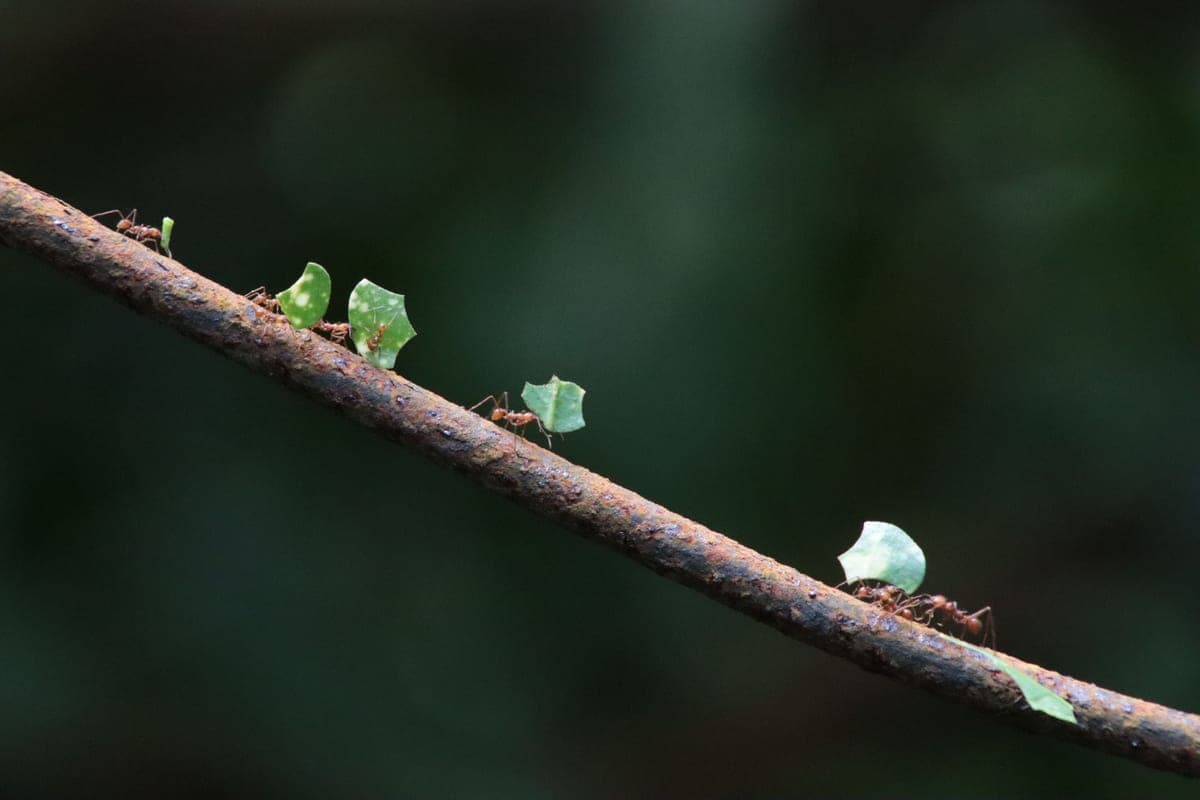
Hang an ant moat — a small cup of plain water — between the hook and the feeder. Ants will not cross water, and that is the entire mechanism. Audubon describes feeders equipped with moats to drown ants and attachable ant guards you can buy separately. Keep the moat clean and filled with plain water, and the problem is solved.
What we recommend here
| # | Product | Best for | Score | Price |
|---|---|---|---|---|
| 1 | No product photo yet Trap-It Ant Moat 3/4 cup of water — it survives a hot day without going dry | Best add-on moat | 8.8 out of 10 | |
| 2 |  Aspects HummZinger HighView 12 oz The moat is part of the lid — nothing to forget or lose | Best feeder with a moat built in | 9.0 out of 10 | |
| 3 |  Kingsyard 24 oz Glass Feeder Ships with a large moat and a stainless hook | Best large-capacity moat included | 8.1 out of 10 |
Scores are our own editorial ratings from the criteria on our methodology page. They are not customer ratings and they are not test results.
The mechanism
An ant moat is a small cup that hangs above the feeder, on the same wire, and holds plain water. Ants travel down from the branch or hook, meet water, and stop. They will not swim it and they cannot go around it.
It is one of the rare pest solutions that is close to completely effective, requires no chemicals, and costs a few dollars. Some feeders have one built into the lid so there is no separate part to buy or lose — those are in feeders with a built-in ant moat. When it does not work, it is nearly always one of the four reasons below rather than a failure of the idea.
The four ways a moat fails
1. It is empty
The overwhelming majority of failures. Water evaporates, particularly in the heat when ants are most active, and an empty moat is just a bridge with extra steps. Worse, it is a bridge you have stopped checking, because you believe the problem is handled.
Fix: top it up every time you refill the feeder, which you are already doing every three to five days. Capacity helps — the Trap-It holds three-quarters of a cup, which is more than most and lasts noticeably longer between top-ups.
2. There is another route in
A moat protects the wire. It does nothing about a feeder resting against a wall, hanging from a branch that touches the feeder itself, or mounted on a pole — ants simply walk up the pole.
Fix: hang the feeder free, with clear air around it, from a hook rather than tight against anything. If you are pole-mounted, the moat is the wrong tool and you need a barrier on the pole instead. Placement.
3. The feeder is dripping
A moat stops ants reaching the feeder from above. It does nothing about the sticky trail leading up from the ground to a feeder that has been dripping nectar onto the grass beneath it. And a leaking feeder is what recruited them in the first place.
Fix: a saucer feeder, which cannot drip. Why feeders leak.
4. Something is in the water
Some people add oil to the moat so it does not evaporate. Do not. Oil in a moat directly above a feeder ends up on the feeder, and oils and petroleum products can damage a hummingbird’s feathers. Plain water only.
Built-in or add-on?
Prefer built-in. The HummZinger line, both Kingsyard models, the More Birds Ruby and the First Nature bases all include one, and a moat you cannot forget to buy is worth a little extra on the feeder.
If your feeder has no moat, an add-on solves it for a few dollars. Look for one with genuine water capacity and open hooks top and bottom — the Trap-It has open eye hooks at both ends and takes almost any hanging feeder.
What not to use
- Insecticide or ant powder. Audubon warns that pesticides can injure, kill and reduce population numbers of birds, bees and other animals. Never near a feeder.
- Petroleum jelly or oil on the wire. It works on ants and it ends up on birds. The same objection as at the ports.
- Sticky tape on the hanger. Traps whatever touches it, which in a garden includes things you did not intend.
- Aluminum foil. A persistent piece of folklore with no mechanism behind it — covered separately.
Keeping the moat itself clean
It is an open cup of standing water in a garden. Tip it out, rinse it and refill it with fresh water whenever you refill the feeder — same visit, ten extra seconds. Stagnant water is its own small problem and a dirty moat is easy to overlook when you are focused on the feeder.
Recommended for this
What we’d buy
1. Best add-on moat
Trap-It Ant Moat
A three-quarter-cup water moat that hangs above any feeder. It holds more water than most, which is the only spec that matters — a moat that dries out on a hot afternoon is a bridge.
photo yet
- Type
- Hanging water ant moat
- Water capacity
- 3/4 cup
- Dimensions
- Approx. 3" diameter x 3.5" tall including hooks
- Material
- One-piece weather-resistant plastic
- Hooks
- Open eye hooks top and bottom, 3/8 in diameter
- Colors
- Red, orange
Our score: 8.8/10 — an editorial rating, not a customer rating or a test result.
Cleaning access
One open cup. Tip it out, rinse it, refill with plain water when you refill the feeder — conveniently the same visit.
What works
- Larger water capacity than most moats, so it survives a hot day without going dry
- Open hooks top and bottom fit almost any hanging feeder
- One piece of plastic — nothing to break or lose
What doesn’t
- Does nothing whatsoever for bees or wasps; that is a port-size problem
- Needs topping up, and an empty moat is worse than none because you stop checking
- Only useful on a hanging feeder — a pole-mounted feeder needs a different answer
Specifications from Duncraft — Trap-It Ant Moat. We have not handled this feeder — here is what we did instead.
2. Best feeder with a moat built in
Aspects HummZinger HighView 12 oz
A four-port saucer feeder with the ant moat built into the lid and a cover that lifts straight off — the shortest path from hanging it up to washing it out.
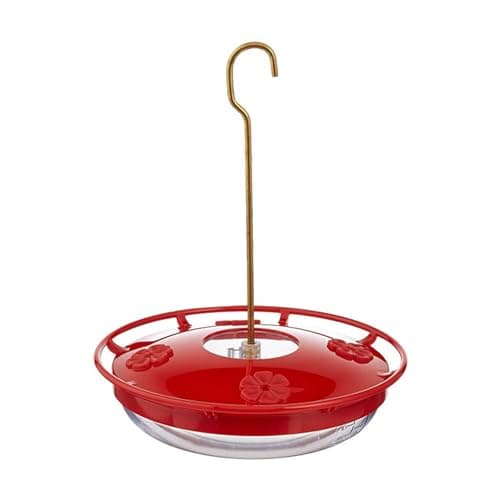
- Type
- Saucer (dish)
- Capacity
- 12 oz
- Feeding ports
- 4
- Material
- Polycarbonate, metal hanger
- Dimensions
- 7.75" x 7.75" x 1.75"
- Ant moat
- Built in
- Perch
- Raised wraparound perch
- Mounting
- Hang or post mount
Our score: 9.0/10 — an editorial rating, not a customer rating or a test result.
Cleaning access
Two parts. The cover lifts off the base with no tools and no threads to cross, and the whole dish is one open bowl — a two-minute wash with a brush and hot water, which is exactly the cadence a nectar feeder needs. The moat is part of the lid, so there is no separate accessory to lose or forget to refill.
What works
- Saucer design puts nectar below the ports, so it does not drip as the air inside warms
- Ant moat is integral to the lid rather than a separate hanging accessory
- Opens to a single shallow bowl — the easiest shape in the category to scrub
- Raised ports shed rain, which keeps the nectar from being diluted
What doesn’t
- 12 oz is small for a busy yard
- Polycarbonate clouds over several seasons in a way glass does not
- No bee-excluding port tips fitted — that is the Ultra's feature, not the HighView's
Specifications from Duncraft — Aspects High View HummZinger and Amazon — Aspects HummZinger HighView 12 oz. We have not handled this feeder — here is what we did instead.
3. Best large-capacity moat included
Kingsyard 24 oz Glass Feeder
The 24 oz version of the same idea, with a see-through base so you can read the nectar level without unhooking it. Buy it only if your yard genuinely drinks that much.
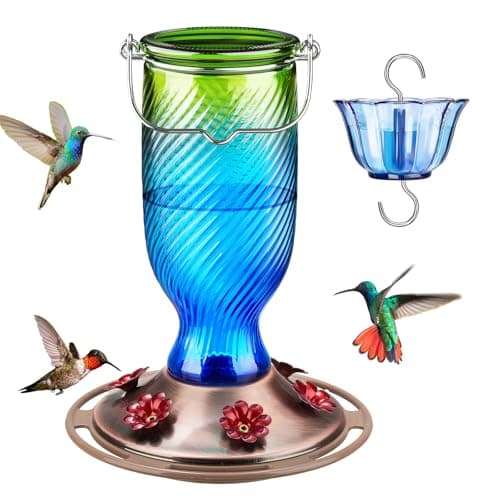
- Type
- Glass bottle
- Capacity
- 24 oz
- Feeding ports
- 6
- Material
- Glass
- Dimensions
- 6" diameter x 12" tall
- Ant moat
- Included, with stainless steel hook
- Filling
- Wide-mouth
Our score: 8.1/10 — an editorial rating, not a customer rating or a test result.
Cleaning access
Wide mouth, fully disassembles, see-through base. The catch is arithmetic rather than design: 24 oz on a two-to-five-day change cycle is a lot of sugar water going down the drain unless the yard is busy.
What works
- See-through base makes it obvious when the nectar has gone cloudy
- Wide mouth takes a full-size bottle brush
- Stainless hook and a large-capacity ant moat included
What doesn’t
- 12" of glass full of nectar is a serious weight on a shepherd's hook
- Capacity you will not use outside peak season, and unused nectar still spoils on schedule
- Six ports plus a moat is the most parts to wash of any feeder here
Price as of October 16, 2026. #ad How we’re funded
Specifications from Kingsyard — hummingbird feeder range and Walmart — Kingsyard Glass Hummingbird Feeder, 24 oz, ant moat included. We have not handled this feeder — here is what we did instead.
Common questions
Frequently asked
How do I keep ants out of my hummingbird feeder?
Hang an ant moat — a small cup of plain water — between the hook and the feeder. Ants will not cross water. Keep it filled, and make sure there is no other route in from a wall, branch or pole.
What do you put in an ant moat?
Plain water, and nothing else. Never oil — a moat sits directly above the feeder and oils can damage a hummingbird’s feathers.
Why is my ant moat not working?
Almost always because it has dried out. After that: another route in from a wall, branch or pole; or a dripping feeder that has already drawn a trail up from the ground.
Does an ant moat work on a pole-mounted feeder?
No — ants walk up the pole and bypass it entirely. A moat only protects a feeder hanging free on a wire. A pole needs a barrier on the pole itself.
Does aluminum foil keep ants off a hummingbird feeder?
No. It is folklore with no mechanism behind it — ants walk over foil without difficulty. Water is what stops them.
Sources
Where this came from
Read next
Related reading
By Scooter M.
an enthusiast who's genuinely into this. I read the manuals, compile the published specs, and do the math. No lab coat.
Published September 1, 2026