Cleaning
How often to clean a hummingbird feeder
The schedule is set by the weather, not by how full the feeder looks. This is the page the rest of the site is built around.
We earn a commission on purchases made through our links, at no extra cost to you. We don’t accept free products or paid placements. Full disclosure.
Change the nectar every three to five days in moderate weather, and daily in very hot weather. Wash the feeder properly at the same time — Cornell’s guidance is to clean feeders at least once a week with hot water and a bottle brush, and Clemson’s extension service recommends refilling twice a week with a full break-down wash weekly using a four-to-one vinegar and water solution.
What we recommend here
| # | Product | Best for | Score | Price |
|---|---|---|---|---|
| 1 |  Aspects HummZinger HighView 12 oz Lift-off cover, one open dish, built-in moat | Fastest to clean | 9.3 out of 10 | |
| 2 | No product photo yet Hummingbird Feeder Brush Kit (3-piece) The port brush reaches the surface nothing else does | The tool the schedule needs | 8.6 out of 10 | |
| 3 | No product photo yet First Nature 3051 16 oz Wide mouth and a base that twists into two pieces | Cheapest that still opens properly | 8.5 out of 10 |
Scores are our own editorial ratings from the criteria on our methodology page. They are not customer ratings and they are not test results.
The schedule
| Conditions | Change nectar | Full break-down wash |
|---|---|---|
| Cool, shaded, spring or fall | Every 4-5 days | Weekly |
| Moderate summer weather | Every 3 days | Weekly |
| Hot weather | Every 2 days | Weekly, or whenever you see anything |
| Very hot, or feeder in direct sun | Daily | Weekly, or whenever you see anything |
Those are two different jobs. Changing means empty, rinse, refill. Washing means take it apart and clean every surface with a brush. The first happens every few days; the second at least weekly.
Why this matters more than any other page on the site
Warm sugar water sitting outdoors is close to a perfect medium for yeast and mold. Yeast ferments the sugar, which turns nectar into something a hummingbird gets no energy from and may be harmed by. Mold establishes in the feeding ports, which is exactly where a bird puts its bill and tongue.
Cornell’s wording is unambiguous — change sugar water to prevent mold and deadly fermentation. That is the risk being managed. A feeder is not neutral equipment you can leave up and forget; it is a shared drinking station whose safety is entirely a function of how often you wash it.
Why we score feeders on cleaning access
Here is the connection that most of this category ignores, and it is the reason this site exists in the shape it does.
The schedule above is not optional and it is not negotiable — but it is entirely dependent on human follow-through, across six months, in the middle of ordinary life. And follow-through is a function of friction.
A saucer feeder that opens in one motion and washes as a shallow bowl takes about two minutes. A sealed decorative bottle you cannot get a brush into takes ten, and involves swearing. Over sixty washes in a season, that difference is not a convenience preference — it is the difference between a schedule you keep and one that quietly becomes fortnightly.
Which is why cleaning access is scored on every product on this site, and why our top pick is a $25 dish rather than something prettier. See our methodology and the main roundup.
Making the routine survivable
- Batch the nectar. Mix a cup of sugar to four cups of water on a Sunday and keep it covered in the fridge. Refills become pour-and-go. The recipe.
- Own a port brush. Not a sponge, not a rinse. The inside of a feeding port is the one surface running water does not reach and the first place mold appears. Brush kits.
- Hang it where you can reach it. Four to six feet, no ladder. This single decision decides more compliance than any other. Placement.
- Buy smaller and fill less. A part-filled feeder means less nectar poured away at each change, which makes changing it feel less wasteful — and therefore more likely to happen. Sizing.
- Put it in the shade. Morning sun, afternoon shade. This directly buys you days on the schedule.
Signs you are already late
- Cloudy nectar
- Anything floating or stringy in the reservoir
- Black specks in or around the ports — that is mold
- A sour smell when you unhook it
- Birds visiting and leaving without drinking
Use these as an alarm, not as the schedule. Nectar can be unsafe before it looks wrong, so the calendar leads and your eyes are the backstop.
What about winter?
Cold weather slows fermentation considerably, so the interval stretches — but it does not stop, and a feeder left up through a mild winter still needs regular changes. Freezing brings its own problem: nectar that freezes and thaws repeatedly separates, and a glass reservoir can crack. See when to take feeders down.
Recommended for this
What we’d buy
1. Fastest to clean
Aspects HummZinger HighView 12 oz
A four-port saucer feeder with the ant moat built into the lid and a cover that lifts straight off — the shortest path from hanging it up to washing it out.
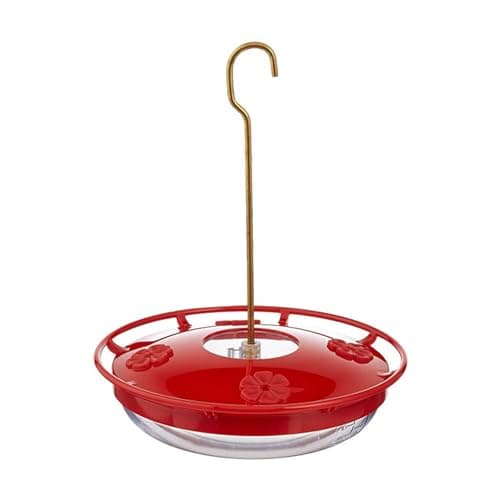
- Type
- Saucer (dish)
- Capacity
- 12 oz
- Feeding ports
- 4
- Material
- Polycarbonate, metal hanger
- Dimensions
- 7.75" x 7.75" x 1.75"
- Ant moat
- Built in
- Perch
- Raised wraparound perch
- Mounting
- Hang or post mount
Our score: 9.3/10 — an editorial rating, not a customer rating or a test result.
Cleaning access
Two parts. The cover lifts off the base with no tools and no threads to cross, and the whole dish is one open bowl — a two-minute wash with a brush and hot water, which is exactly the cadence a nectar feeder needs. The moat is part of the lid, so there is no separate accessory to lose or forget to refill.
What works
- Saucer design puts nectar below the ports, so it does not drip as the air inside warms
- Ant moat is integral to the lid rather than a separate hanging accessory
- Opens to a single shallow bowl — the easiest shape in the category to scrub
- Raised ports shed rain, which keeps the nectar from being diluted
What doesn’t
- 12 oz is small for a busy yard
- Polycarbonate clouds over several seasons in a way glass does not
- No bee-excluding port tips fitted — that is the Ultra's feature, not the HighView's
Specifications from Duncraft — Aspects High View HummZinger and Amazon — Aspects HummZinger HighView 12 oz. We have not handled this feeder — here is what we did instead.
2. The tool the schedule needs
Hummingbird Feeder Brush Kit (3-piece)
A bottle brush, a socket brush and a thin port brush. The port brush is the one that matters — it is the only thing that reaches inside a flower port, and a flower port is where mold starts.
photo yet
- Bottle brush
- Typically 13.5" long, 1.5" bristle diameter
- Socket brush
- Typically 8" long, 1" bristle diameter
- Port brush
- Typically 8.25" long, sized for feeding ports
- Bristles
- Nylon — non-scratching on glass and plastic
Our score: 8.6/10 — an editorial rating, not a customer rating or a test result.
Cleaning access
Rinse the brushes when you rinse the feeder and stand them up to dry. A brush stored wet in a drawer grows its own problem.
What works
- The port brush reaches the one surface a sponge and a stream of water never will
- Nylon bristles will not scratch polycarbonate, which is what makes it cloud
- Cheap enough that there is no argument for not owning one
What doesn’t
- Kit contents vary by seller — check the port brush is actually included
- A 13.5" bottle brush will not reach the bottom of a tall 32 oz reservoir
- Bristles wear out; a splayed brush stops reaching into ports
Specifications from Duncraft — Nectar Brush Set and Blue Bird Landing — Hummingbird Feeder Cleaning Brush 3-Piece Kit. We have not handled this feeder — here is what we did instead.
3. Cheapest that still opens properly
First Nature 3051 16 oz
Ten ports, a wide-mouth reservoir and a base that twists into two pieces — the cheapest feeder in the category that is genuinely easy to clean, which is the only reason it is here.
photo yet
- Type
- Inverted bottle
- Capacity
- 16 oz
- Feeding ports
- 10
- Material
- Plastic
- Base
- Patented two-part base, twists apart
- Reservoir
- Wide-mouth
- Ant moat
- Built into the base
- Dishwasher
- Not dishwasher safe — warm soapy water
Our score: 8.5/10 — an editorial rating, not a customer rating or a test result.
Cleaning access
Better than the price suggests. The reservoir mouth is wide enough to take a bottle brush without contortions, and the base twists into two pieces so you can reach the underside of the ports — the spot that grows mold first on a cheap bottle feeder. First Nature specifies warm soapy water, not the dishwasher.
What works
- Wide-mouth reservoir takes a standard bottle brush, unlike most budget bottle feeders
- Two-part base opens up the port undersides, which is where mold starts
- Ten ports and an integrated ant moat at the bottom of the category's price range
What doesn’t
- It is an inverted bottle, so it can drip as trapped air warms and pushes nectar out
- Not dishwasher safe, and the thin plastic would not enjoy a hot wash anyway
- Fill all 16 oz in a quiet yard and you will pour most of it away
Specifications from Oak Ridge Stores — First Nature FN3051. We have not handled this feeder — here is what we did instead.
Common questions
Frequently asked
How often should you clean a hummingbird feeder?
Change the nectar every three to five days in moderate weather and daily in very hot weather, and take the feeder fully apart for a proper wash at least once a week.
How often should I change hummingbird nectar in hot weather?
Daily. Heat accelerates fermentation and mold growth, and a feeder in direct afternoon sun is effectively on the daily schedule whatever the air temperature says.
Can I just rinse the feeder instead of washing it?
A rinse is fine between full washes, but it is not a substitute. Running water does not reach inside the feeding ports, which is where mold starts. You need a brush at least weekly.
What happens if you don't clean a hummingbird feeder?
The nectar ferments and mold establishes in the ports. Cornell’s guidance describes preventing mold and deadly fermentation as the reason for the schedule — this is a welfare issue rather than a tidiness one.
Does a bigger feeder need cleaning less often?
No. The schedule is set by temperature, not volume. A bigger feeder just means more nectar to pour away at each change.
Sources
Where this came from
Read next
Related reading
By Scooter M.
an enthusiast who's genuinely into this. I read the manuals, compile the published specs, and do the math. No lab coat.
Published September 1, 2026