Nectar
What not to put in hummingbird nectar
Five substitutes people reach for, and what each one actually does. The first is the one that can kill a bird.
Plain refined white sugar and water. Nothing else. Honey is the dangerous one — Audubon warns it can promote dangerous fungal growth. Red food coloring is unnecessary and Audubon notes it could also prove harmful. Brown, raw and unrefined sugars are not what the recipe calls for, and artificial sweeteners are not food for an animal that is fueling flight muscles.
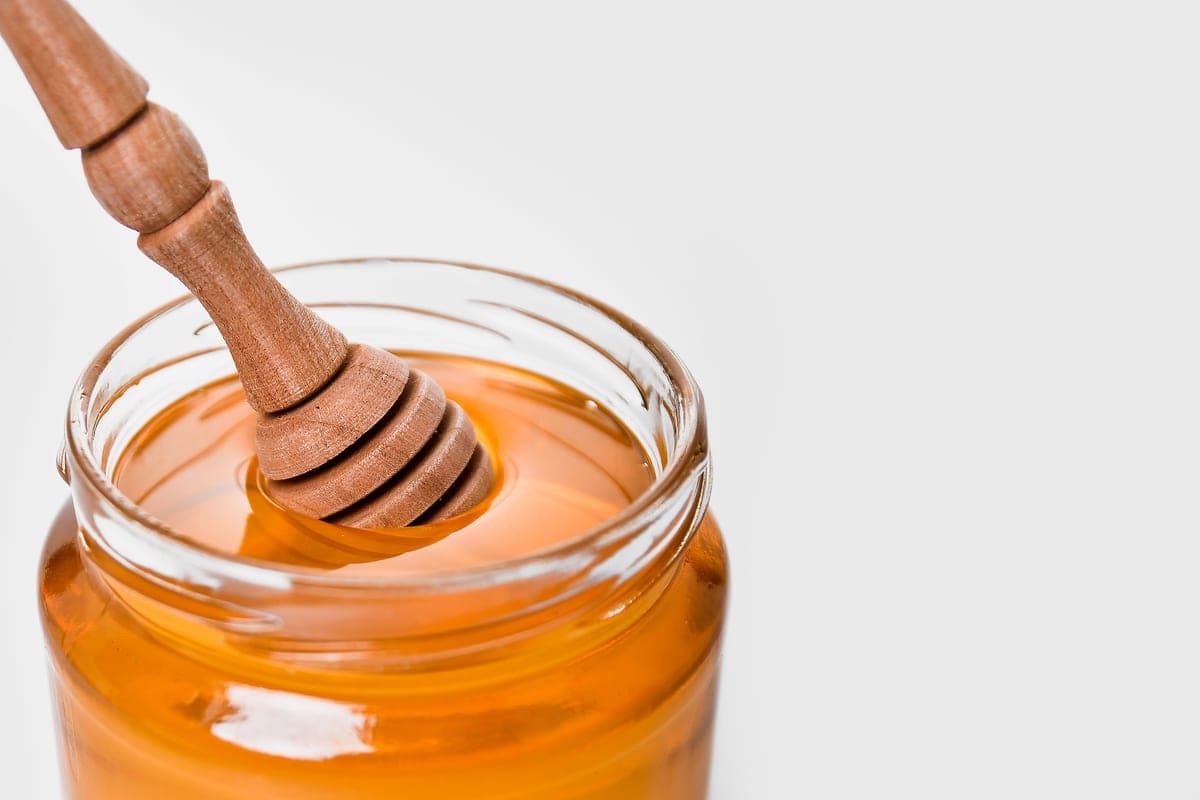
Honey — the one that matters most
If you take one thing from this page: do not put honey in a hummingbird feeder. Audubon is direct about it — honey can promote dangerous fungal growth.
The reasoning is that honey is not just sugar. It carries yeasts and fungal spores, and diluted in warm water in an outdoor feeder it becomes a growth medium in a way that a refined sucrose solution does not. The bird then drinks it and carries it in a mouth and tongue that are constantly wet.
Honey feels like the natural, kind choice, which is exactly why it keeps getting used. It is the single most harmful thing on this list.
Red food coloring
Audubon calls red food coloring not necessary and notes that it could also prove harmful. That is the published position and it is enough to settle the question.
The practical point is that it does not even work as intended. Hummingbirds are drawn to red on the feeder, which is why almost every feeder on the market has a red lid or red ports. The nectar itself is invisible from a distance. Dye adds a possible risk in exchange for no benefit — a straightforwardly bad trade. More on the red dye question.
Brown sugar, raw sugar, turbinado, unrefined
The recipe specifies refined white sugar. Less-refined sugars retain molasses and other components that refined white sucrose does not, and the standard guidance across the category is to avoid them. This is not a case where “less processed” is gentler — the whole point of refined white sugar here is that it is nearly pure sucrose, which is what flower nectar is made of.
Artificial sweeteners
A hummingbird visits a feeder for calories. A zero-calorie sweetener provides the taste of food and none of the fuel, to an animal with one of the highest metabolic rates of any vertebrate. There is no version of this that is a good idea.
Everything else people add
- Vitamins, supplements or “nectar boosters.” Hummingbirds get protein and micronutrients from insects and spiders, not from nectar. Your feeder is a fuel stop, not a complete diet, and it does not need to be one.
- Fruit juice. Ferments faster than sugar water and brings its own yeasts.
- Molasses, agave, maple syrup, corn syrup. All non-sucrose or mixed-sugar products outside the tested recipe. Refined white sugar is the answer.
- Anything to deter insects. Never put anything in nectar to repel bees or ants. That is a feeder-design problem and a moat problem, solved outside the liquid.
And two things not to put on the feeder either
Insecticide. Audubon is explicit that pesticides can injure, kill and reduce population numbers of birds, bees and other animals. Nothing sprayed goes near a feeder.
Oil or petroleum jelly around the ports. A widely repeated bee tip and a genuinely bad one: oils and petroleum products can damage feathers if a hummingbird contacts them, and a hummingbird will contact anything smeared around the hole it feeds from.
What to do instead
Four parts water, one part plain white sugar, boiled to dissolve, cooled, and changed every three to five days — daily in very hot weather. That is the entire discipline, and the recipe page has it in full: hummingbird nectar recipe.
The part that is genuinely hard is the change cycle, not the ingredients. That is what the cleaning page is for, and it is why we score feeders on how fast they come apart.
Common questions
Frequently asked
Can you use honey in a hummingbird feeder?
No. Audubon warns that honey can promote dangerous fungal growth. It is the most harmful common substitution and should never be used, however natural it feels.
Can you use brown sugar for hummingbirds?
No. The recipe calls for refined white sugar. Less-refined sugars retain molasses and other components, and the standard guidance is to avoid them.
Is red dye bad for hummingbirds?
Audubon calls it not necessary and notes it could also prove harmful. It also does not work as intended — birds are attracted by red on the feeder, not red in the liquid.
Should I add vitamins or nectar boosters?
No. Hummingbirds get protein and micronutrients from insects and spiders. Your feeder is a fuel stop and does not need to be a complete diet.
Can I put something in the nectar to keep bees away?
Never. Bees are a feeder-design problem, solved with a saucer design or fitted bee guards, and drips are what attract them. Nothing goes into the nectar to repel insects.
Sources
Where this came from
Read next
Related reading
By Scooter M.
an enthusiast who's genuinely into this. I read the manuals, compile the published specs, and do the math. No lab coat.
Published September 1, 2026