Reviews
Birdfy vs Bird Buddy
The only other comparison of these two on the internet is published by one of them. Here is one that is not.
We earn a commission on purchases made through our links, at no extra cost to you. We don’t accept free products or paid placements. Full disclosure.
Bird Buddy Pro for image quality; Birdfy Hum Feeder Duo for coverage. The Bird Buddy has the better camera on published specifications — 2K video, 5MP stills, a 1/2.7-inch HDR sensor, a 122-degree field of view and slow motion — on a 14 fl oz basin with five ports. The Birdfy Duo counters with two 2K cameras on a 20 oz three-port body, which is the only design here that does not miss the bird on the far side.

What we recommend here
| # | Product | Best for | Score | Price |
|---|---|---|---|---|
| 1 | No product photo yet Bird Buddy Smart Hummingbird Feeder Pro 2K, 5MP, HDR sensor, 122-degree field of view | Best camera | 8.8 out of 10 | |
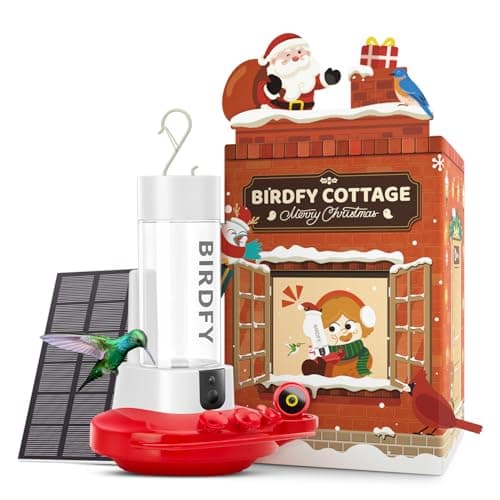
| 2 |  Birdfy Hum Feeder Duo Two 2K cameras — no blind side | Best coverage | 8.5 out of 10 | |
| 3 | No product photo yet Birdfy Hum Feeder 1080p and one port; the compromise version | Cheapest entry | 7.2 out of 10 |
Scores are our own editorial ratings from the criteria on our methodology page. They are not customer ratings and they are not test results.
Why this page exists
Birdfy publishes its own Birdfy-versus-Bird-Buddy comparison. That is a vendor grading its own homework, and however carefully written it is, it is not the thing a buyer is looking for.
We sell neither. We earn a commission if you buy either through our links, which we say plainly, and the specifications below are quoted from each maker’s own published material. We have not handled either unit — this is what we did instead.
There is now a third brand worth putting in the same conversation: FeatherSnap, whose free tier includes the AI species identification that both of these companies treat as a headline feature. That pairing has its own head-to-head in FeatherSnap vs Bird Buddy.
Side by side
| Bird Buddy Pro | Birdfy Hum Feeder Duo | |
|---|---|---|
| Video | 2K | 2K, dual camera |
| Stills | 5MP | Not published in the same detail |
| Sensor | 1/2.7", HDR | Not published in the same detail |
| Field of view | 122 degrees | Two angles, opposite sides |
| Capacity | 14 fl oz (1.75 cups) | 20 oz |
| Ports | 3 open flower, 2 closed flower | 3 |
| Solar | Solar roof variant | Solar panel variant |
| Ant moat | Not listed as standard | 2 included on solar variants |
| AI | Species identification | Species identification; lifetime-AI bundle offered |
Note the asymmetry in that table, because it is itself informative: Bird Buddy publishes sensor size, HDR and field of view; Birdfy leads on the dual-camera concept and publishes less optical detail. We have not filled those gaps with estimates.
The camera argument
On published specifications the Bird Buddy Pro wins, and the deciding figure is not the resolution — it is the 1/2.7-inch HDR sensor. A hummingbird is a small iridescent subject often photographed against a bright sky, which is one of the harder exposure problems in consumer imaging. HDR is what separates a bird from a silhouette. The 122-degree field of view and slow motion both matter for an animal beating its wings dozens of times a second.
The coverage argument
The Birdfy Duo answers a problem the spec sheet does not describe. A single-camera feeder watches one side. A hummingbird will use whichever port it likes, including the one facing away, and you will never see it.
Two cameras on opposite sides removes that entirely. It is a genuinely different product rather than a bigger number, and if your frustration with camera feeders is missed visits rather than image quality, it is the right buy.
As feeders, rather than cameras
The Bird Buddy has more ports — five, three of them open — against the Duo’s three. The Duo holds more nectar, 20 oz against 14.
Both are ordinary. Neither approaches a $25 saucer on capacity-per-port or on cleaning speed, and both need washing every few days around a camera module. The cadence. If you want more hummingbirds in the yard rather than better pictures of them, buy two plain saucers and put the difference somewhere else.
Buy the Bird Buddy if… buy the Birdfy Duo if…
Buy the Bird Buddy Pro if image quality is the point — you want the best stills and the best chance in awkward light — and you are content watching one side of the feeder. Take the solar roof variant.
Buy the Birdfy Hum Feeder Duo if what frustrates you is missing visits. Two cameras and 20 oz, and the lifetime-AI bundle avoids an open-ended subscription. Check which variant ships the two ant moats — we go through that, and the rest of the published specification, in the Birdfy Hum Feeder Duo review.
Buy neither if you are choosing between a camera feeder and two good plain feeders, and what you actually want is more birds. That is not a criticism of either product — it is a different purchase. The main roundup.
Recommended for this
What we’d buy
1. Best camera
Bird Buddy Smart Hummingbird Feeder Pro
The best-specified camera in the category — 2K video, 5MP stills, a 1/2.7" sensor with HDR and a 122-degree field of view — on a 14 oz basin with five ports, three open and two closed.
photo yet
- Type
- Smart camera feeder
- Capacity
- 14 fl oz (1.75 cups)
- Camera
- 2K video, 5MP stills
- Sensor
- 1/2.7", HDR
- Field of view
- 122 degrees
- Feeding ports
- 3 open flower, 2 closed flower
- Power
- Solar roof variant available
Our score: 8.8/10 — an editorial rating, not a customer rating or a test result.
Cleaning access
A basin rather than a bottle, which helps — the nectar sits in an open reservoir you can reach into, and the camera module detaches. It is still the slowest wash of anything in this guide, and if a two-day change cycle already sounds like a chore, this is the feeder where it will become one.
What works
- Genuinely the best camera hardware here — HDR, a wide field of view and slow motion
- Five ports, three of them open, so it works as a feeder and not only as a camera
- Solar roof variant removes the recharging chore that kills enthusiasm for these
What doesn’t
- Premium price, and the solar roof is a separate variant
- 14 oz is modest for the money
- Every camera feeder trades cleaning speed for footage, and cleaning speed is what keeps nectar safe
Specifications from Bird Buddy — Smart Hummingbird Feeder Pro Solar. We have not handled this feeder — here is what we did instead.
2. Best coverage
Birdfy Hum Feeder Duo
Two 2K cameras pointed at opposite sides of a 20 oz, three-port feeder. It is the only design here that does not miss the bird landing on the far side.
- Type
- Smart camera feeder
- Capacity
- 20 oz
- Camera
- Dual camera, 2K
- Feeding ports
- 3
- Power
- Solar panel variant available
- Ant moat
- 2 included (solar variants)
- Software
- AI bird recognition; lifetime-AI bundle offered
Our score: 8.5/10 — an editorial rating, not a customer rating or a test result.
Cleaning access
Three ports and a 20 oz reservoir to wash on a nectar schedule, around two camera modules. Better than the single-cam model in that the reservoir is larger and the ports are conventional, but the same tension applies: the more careful the wash, the more likely it gets postponed.
What works
- Dual cameras remove the single-camera blind side, the real limitation of the format
- 2K rather than 1080p
- Three ports and 20 oz make it a usable feeder, not just a camera mount
- A lifetime-AI bundle avoids an open-ended subscription
What doesn’t
- The most expensive feeder we cover, by a wide margin
- Two ant moats are listed for solar variants — confirm what your variant ships with
- Still electronics on a device that needs washing every few days
Specifications from Birdfy — Hum Feeder Duo, dual camera, 2K and Amazon — NETVUE by Birdfy Hummingbird Feeder with 2 Cameras, 20 oz. We have not handled this feeder — here is what we did instead.
3. Cheapest entry
Birdfy Hum Feeder
A 14 oz camera feeder at 1080p with a single flower port and an ant moat — the entry point to the category, and the one where the port count tells you it is a camera first and a feeder second.
photo yet
- Type
- Smart camera feeder
- Capacity
- 14 fl oz
- Camera
- 1080p FHD
- Feeding ports
- 1, flower-shaped side-swivel
- Connectivity
- 2.4 GHz Wi-Fi
- Ant moat
- Included
- Software
- AI species identification
Our score: 7.2/10 — an editorial rating, not a customer rating or a test result.
Cleaning access
This is the honest weak point of every camera feeder and it is worth saying plainly: there is electronics attached to a thing that must be washed every few days. The nectar reservoir separates from the camera module, but the routine is slower and more careful than any dumb feeder here — and that friction is exactly what makes people clean it less often.
What works
- Lowest-cost route into a camera feeder
- Ant moat supplied rather than sold separately
- Species identification is genuinely enjoyable on a feeder you watch daily
What doesn’t
- One feeding port — several birds cannot use it at once
- 1080p, where the newer models in this category are 2K
- Cleaning around electronics is slower, and slower cleaning is the failure mode that hurts birds
- Full AI features generally sit behind a subscription; check what is included before buying
Specifications from Best Buy — Birdfy Hummingbird Feeder with Camera, 1080P FHD, with ant moat and Birdfy — Hum Feeder product page. We have not handled this feeder — here is what we did instead.
Common questions
Frequently asked
Which is better, Birdfy or Bird Buddy?
Bird Buddy Pro on published camera specifications — 2K, 5MP, a 1/2.7-inch HDR sensor and a 122-degree field of view. The Birdfy Hum Feeder Duo wins on coverage, with two 2K cameras and no blind side.
Do both need a subscription?
AI features generally sit behind a plan on both. Birdfy offers a lifetime-AI bundle on some variants, which avoids a recurring fee. Check what renews before buying either.
Which holds more nectar?
The Birdfy Duo at 20 oz, against 14 fl oz for the Bird Buddy Pro. Both are ordinary capacities — you are paying for the camera, not the reservoir.
Is a camera feeder worth it over a normal feeder?
Only if you want the footage. On feeding, cleaning speed and cost per port, a $25 saucer beats both — and a second plain feeder does more for how many birds you see.
Sources
Where this came from
Read next
Related reading
By Scooter M.
an enthusiast who's genuinely into this. I read the manuals, compile the published specs, and do the math. No lab coat.
Published September 1, 2026