Feeders
The best outdoor hummingbird feeders
Every hummingbird feeder is an outdoor feeder. The question is which ones are still worth looking at after two seasons of sun.
We earn a commission on purchases made through our links, at no extra cost to you. We don’t accept free products or paid placements. Full disclosure.
The Aspects HummZinger HighView again, for weather-specific reasons: its raised ports divert rain away from the nectar, the polycarbonate body will not shatter in wind, and the whole thing is two pieces. If you want something that still looks new in year three, take a glass feeder — the Kingsyard 16 oz does not haze the way plastic does.
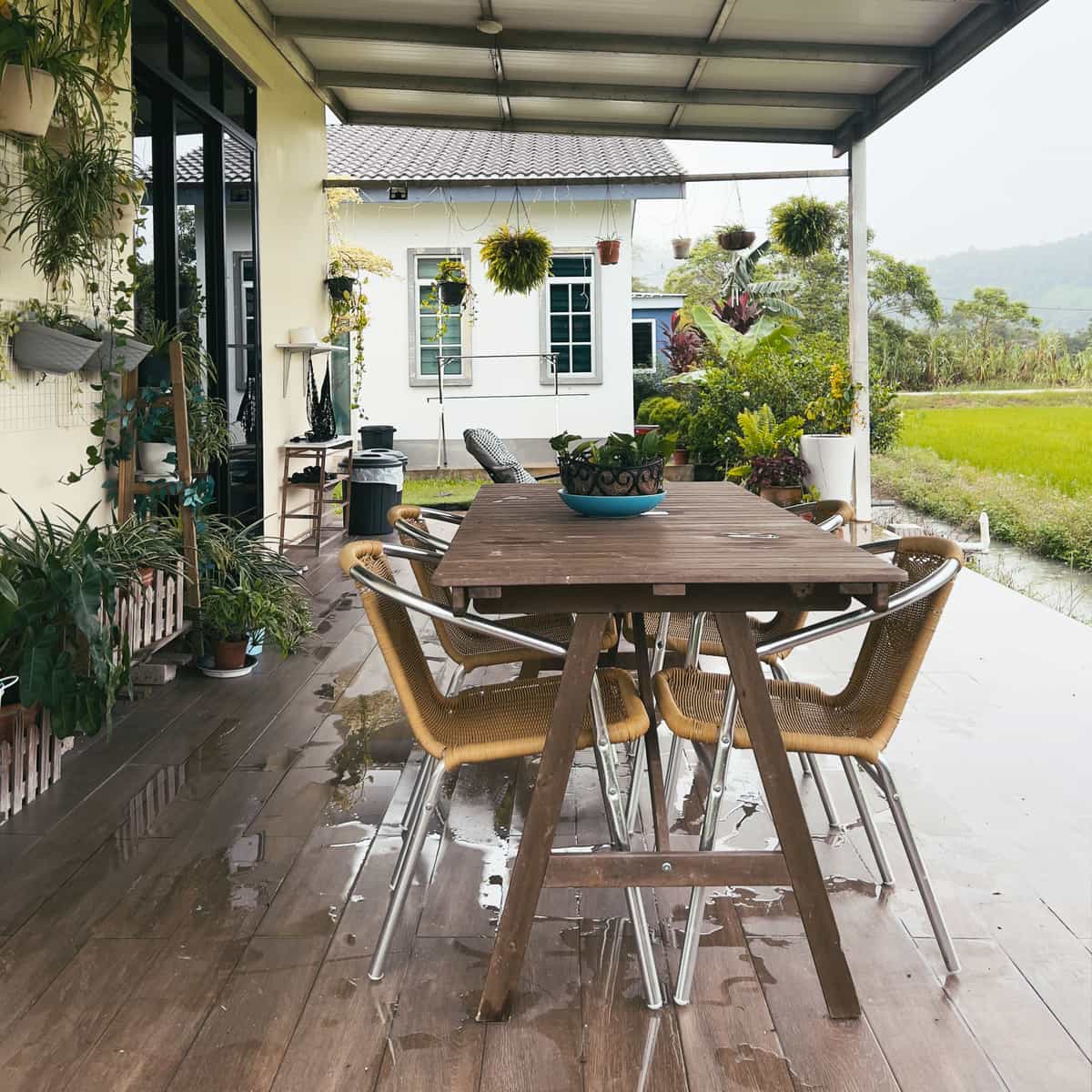
Quick picks
| # | Product | Best for | Score | Price |
|---|---|---|---|---|
| 1 |  Aspects HummZinger HighView 12 oz Raised ports divert rain; unbreakable body | Best all-weather | 9.0 out of 10 | |
| 2 |  Kingsyard 16 oz Glass Feeder Glass does not haze under UV | Best for looking new in year three | 8.4 out of 10 | $19.99 on Amazon $22.99 13% off |
| 3 | No product photo yet First Nature 3051 16 oz Costs little enough that a replaced one is not a loss | Best cheap outdoor feeder | 8.3 out of 10 | |
| 4 |  Aspects HummZinger Excel 16 oz 16 oz and six ports, same weather-shedding lid | Best for a busy exposed yard | 8.6 out of 10 |
Scores are our own editorial ratings from the criteria on our methodology page. They are not customer ratings and they are not test results.
What outdoors actually does to a feeder
UV. Sunlight is what hazes polycarbonate. It is cosmetic in one sense and functional in another: once the reservoir is clouded, you cannot tell by looking whether the nectar has turned, and looking is how most people decide to wash it. Glass is immune; plastic is not. The trade-off is in glass vs plastic.
Heat. This one is about the nectar, not the feeder. Sugar water spoils faster the warmer it gets — Cornell’s guidance is to change it every three to five days and daily in very hot weather. A feeder in full afternoon sun is on the fast schedule. Hanging it where it gets morning sun and afternoon shade buys you real time.
Rain. Rain dilutes nectar, which weakens it and speeds spoilage. Raised ports help, overhead cover helps more, and neither is a substitute for tipping out a rained-into feeder rather than topping it up.
Wind. Wind swings a feeder, which sloshes nectar out of the ports on a saucer and shakes drips out of a bottle. It is also what turns a glass reservoir into a hazard. If your spot is exposed, plastic and a shorter hook.
Where to hang it
The best outdoor placement is usually not the obvious one. You want partial shade for the nectar, somewhere with cover overhead against rain, within a few feet of a perch a bird can survey from, and — separately from all of that — somewhere you can actually reach twice a week without a ladder. That last constraint decides more than people expect, because a feeder you need a stepladder to service is a feeder you service less. The whole subject is on where to hang a hummingbird feeder.
Winter and storage
In most of the country the feeder comes down in fall — see when to take feeders down, which is later than most people think. Whenever it does come down, empty it, wash it properly, dry it completely and store it indoors. Nectar left in a glass feeder over a freeze will crack it, and nectar left in any feeder becomes something you do not want to open in spring.
The picks in full
Every pick, in detail
1. Best all-weather
Aspects HummZinger HighView 12 oz
A four-port saucer feeder with the ant moat built into the lid and a cover that lifts straight off — the shortest path from hanging it up to washing it out.
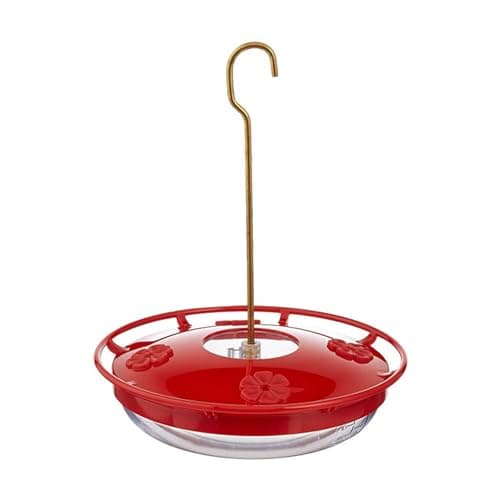
- Type
- Saucer (dish)
- Capacity
- 12 oz
- Feeding ports
- 4
- Material
- Polycarbonate, metal hanger
- Dimensions
- 7.75" x 7.75" x 1.75"
- Ant moat
- Built in
- Perch
- Raised wraparound perch
- Mounting
- Hang or post mount
Our score: 9.0/10 — an editorial rating, not a customer rating or a test result.
Cleaning access
Two parts. The cover lifts off the base with no tools and no threads to cross, and the whole dish is one open bowl — a two-minute wash with a brush and hot water, which is exactly the cadence a nectar feeder needs. The moat is part of the lid, so there is no separate accessory to lose or forget to refill.
What works
- Saucer design puts nectar below the ports, so it does not drip as the air inside warms
- Ant moat is integral to the lid rather than a separate hanging accessory
- Opens to a single shallow bowl — the easiest shape in the category to scrub
- Raised ports shed rain, which keeps the nectar from being diluted
What doesn’t
- 12 oz is small for a busy yard
- Polycarbonate clouds over several seasons in a way glass does not
- No bee-excluding port tips fitted — that is the Ultra's feature, not the HighView's
Specifications from Duncraft — Aspects High View HummZinger and Amazon — Aspects HummZinger HighView 12 oz. We have not handled this feeder — here is what we did instead.
2. Best for looking new in year three
Kingsyard 16 oz Glass Feeder
Six flower ports sized to admit a hummingbird bill and not much else, a thick glass reservoir, and an ant moat in the box — the glass feeder that does not make you buy accessories to finish it.
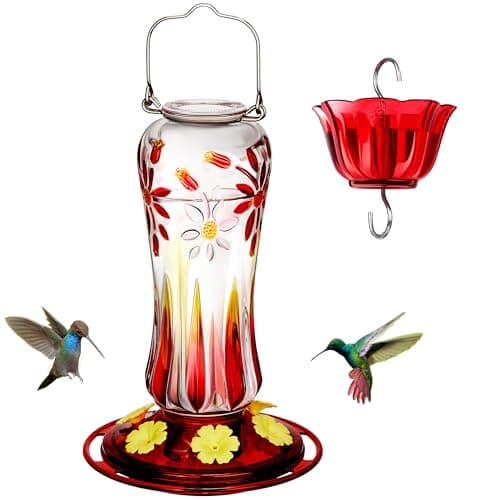
- Type
- Glass bottle
- Capacity
- 16 oz
- Feeding ports
- 6, flower-shaped
- Material
- Glass reservoir, plastic base
- Ant moat
- Included
- Bee guards
- Ports sized to exclude bees
Our score: 8.4/10 — an editorial rating, not a customer rating or a test result.
Cleaning access
Fully disassembles — reservoir, base and ports all come apart, which is what you want, because a six-port base has six places for residue to sit. The glass reservoir is the easy part; plan on a port brush for the flowers.
What works
- Six ports and a supplied ant moat at a mid-range price
- Glass stays visually clean, so the nectar level and its condition are readable at a glance
- Disassembles completely rather than to two pieces
What doesn’t
- More parts to wash than a saucer, every single time
- Glass and a full 16 oz make for a heavy hang
- Port sizing discourages bees but is not the same as a fitted Nectar-Guard tip
Specifications from Kingsyard — hummingbird feeder range and Amazon — Kingsyard Glass Hummingbird Feeders for Outdoors. We have not handled this feeder — here is what we did instead.
3. Best cheap outdoor feeder
First Nature 3051 16 oz
Ten ports, a wide-mouth reservoir and a base that twists into two pieces — the cheapest feeder in the category that is genuinely easy to clean, which is the only reason it is here.
photo yet
- Type
- Inverted bottle
- Capacity
- 16 oz
- Feeding ports
- 10
- Material
- Plastic
- Base
- Patented two-part base, twists apart
- Reservoir
- Wide-mouth
- Ant moat
- Built into the base
- Dishwasher
- Not dishwasher safe — warm soapy water
Our score: 8.3/10 — an editorial rating, not a customer rating or a test result.
Cleaning access
Better than the price suggests. The reservoir mouth is wide enough to take a bottle brush without contortions, and the base twists into two pieces so you can reach the underside of the ports — the spot that grows mold first on a cheap bottle feeder. First Nature specifies warm soapy water, not the dishwasher.
What works
- Wide-mouth reservoir takes a standard bottle brush, unlike most budget bottle feeders
- Two-part base opens up the port undersides, which is where mold starts
- Ten ports and an integrated ant moat at the bottom of the category's price range
What doesn’t
- It is an inverted bottle, so it can drip as trapped air warms and pushes nectar out
- Not dishwasher safe, and the thin plastic would not enjoy a hot wash anyway
- Fill all 16 oz in a quiet yard and you will pour most of it away
Specifications from Oak Ridge Stores — First Nature FN3051. We have not handled this feeder — here is what we did instead.
4. Best for a busy exposed yard
Aspects HummZinger Excel 16 oz
The saucer design scaled up to 16 oz and six ports, for the yard where a 12 oz feeder is empty by Tuesday and birds are queuing.
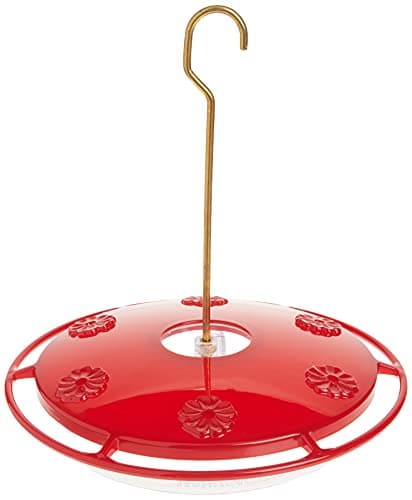
- Type
- Saucer (dish)
- Capacity
- 16 oz
- Feeding ports
- 6
- Material
- Polycarbonate
- Ant moat
- Built in
- Guarantee
- Lifetime guarantee (Aspects)
Our score: 8.6/10 — an editorial rating, not a customer rating or a test result.
Cleaning access
Identical two-part saucer routine to the rest of the HummZinger line — cover off, wash the bowl, done. The larger dish is if anything easier to get a brush around than the 12 oz.
What works
- Six ports genuinely reduces the fighting at a busy feeder
- Still a two-part saucer, so the extra capacity costs nothing in cleaning time
- Aspects' lifetime guarantee covers defects in material and workmanship
What doesn’t
- 16 oz of nectar spoils just as fast as 12 oz — capacity is not permission to clean less often
- Physically wider, which matters under a narrow eave
- No Nectar-Guard tips fitted as standard
Price as of October 16, 2026. #ad How we’re funded
Specifications from Greenhouse Megastore — Aspects HummZinger Excel and Amazon — Aspects HummZinger Excel. We have not handled this feeder — here is what we did instead.
What we’d skip
Feeders with untreated metal fittings or painted decorative hardware
Sugar water plus rain plus a season of sun is a corrosion test, and painted decorative hangers are the first thing to go — usually onto the feeder below. Look for brass, stainless or plain plastic hardware. The HummZinger Ultra's hanger is brass and doubles as the ant moat; the Kingsyard 24 oz ships a stainless hook. Neither is a marketing feature, they are just the parts that survive.
Common questions
Frequently asked
Can I leave a hummingbird feeder out in the rain?
It will survive, but the nectar will not be worth much. Rain dilutes sugar water, which weakens it and speeds spoilage. Raised ports and overhead cover both help; a rained-into feeder should be emptied and refilled rather than topped up.
Does sun ruin hummingbird feeders?
UV hazes polycarbonate permanently, and heat makes nectar spoil faster. Glass avoids the first problem; partial shade helps with both.
Should I bring the feeder in overnight?
Not normally — hummingbirds feed at first light and an absent feeder at dawn is a wasted morning. Bringing it in makes sense only for a hard freeze, when the nectar would freeze solid.
Sources
Where this came from
Read next
Related reading
By Scooter M.
an enthusiast who's genuinely into this. I read the manuals, compile the published specs, and do the math. No lab coat.
Published September 1, 2026