Pests
Squirrels, raccoons and other animals at your feeder
An insect steals a meal. A mammal takes the whole feeder off the hook, and that is a different problem with a different fix.
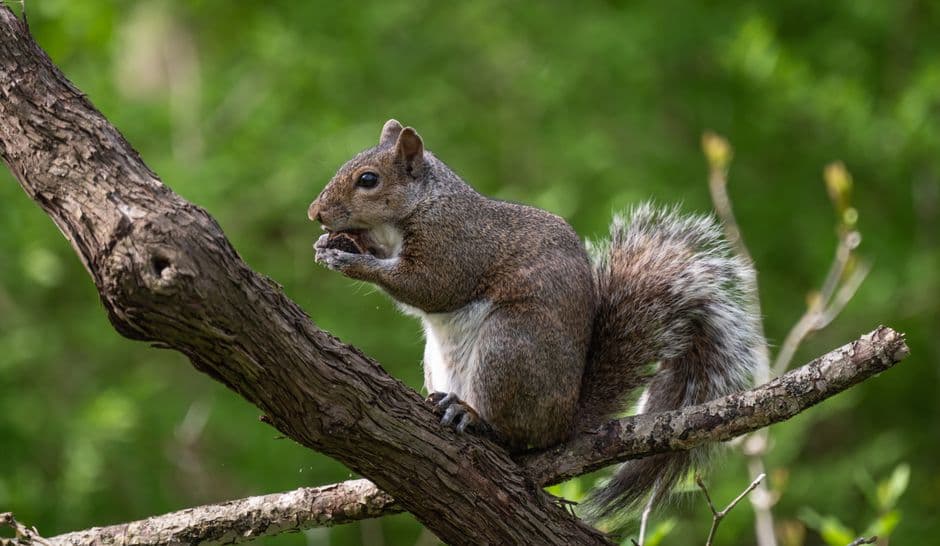
A baffle, correctly sized and correctly positioned. Squirrels and raccoons want the sugar water, and unlike bees they will knock a feeder down, chew it, or drain it entirely. The fix is physical: a steel baffle below a pole-mounted feeder, or a wide dome above a hanging one, with the feeder far enough from any launch point that the animal cannot simply jump past it. For raccoons specifically, bringing feeders in at dusk works and costs nothing.
Why this is not an insect problem
Everything else in this section — bees, wasps, ants — is solved by geometry or by water. A bee is excluded by a port it cannot reach through. An ant is stopped by a moat it will not cross. Both fixes work because the animal is small, and small animals can be blocked by small barriers.
A squirrel weighs a few hundred grams and a raccoon can weigh several kilos. Neither is going to be discouraged by a port fitting. They will hang off the feeder, tip it, chew through plastic, unhook it, or simply carry it away. The damage is usually the point: you are not losing nectar so much as losing feeders.
So the mechanism has to change. You are no longer excluding an animal from the nectar; you are preventing it from reaching the feeder at all. That is a mounting problem, not a feeder problem — and it means no feeder purchase solves it.
Baffles, and how to size one
A baffle is a physical obstruction an animal cannot climb past or get around. There are two shapes and they are not interchangeable.
A pole baffle sits on the pole below the feeder, usually a cone or a wide cylinder. The animal climbs the pole, meets an overhanging surface it cannot reach around, and gives up. Wild Birds Unlimited grades steel raccoon baffles by diameter: a 6-inch baffle is the minimum, 8 inches works for many raccoons, and they strongly recommend a 10-inch baffle as the most successful against all sizes of raccoon. Squirrels are smaller and easier, so a baffle sized for raccoons handles both.
A dome baffle hangs above a feeder suspended from a branch or a hook. The animal comes down the wire, lands on a smooth curved surface that tips and offers no grip, and slides off. For a feeder hanging in a tree, Wild Birds Unlimited suggests a large 18-inch diameter overhead dome, and notes it works better when the baffle hangs from a hook at least two to three feet long — the extra length is what stops the animal simply reaching around from the branch above.
Bigger is genuinely better in both cases. A baffle an animal can reach around is not a baffle; it is a step.
Placement is half of it
A correctly sized baffle on a badly placed pole does nothing, because the animal never climbs the pole — it jumps.
Wild Birds Unlimited’s guidance for handling squirrels and raccoons together is to have the top of the baffle at least five feet above the ground with the pole ten feet from any object. If raccoons are the only concern, they suggest you could possibly get away with four feet above the ground and five to six feet away from other objects.
“Any object” is doing real work in that sentence. It means fences, deck rails, tree limbs, sheds, garden furniture, the wheelie bin you moved last week, and the branch that has grown out since spring. Squirrels are extraordinary jumpers and they are patient about finding the one launch point you did not think of.
This runs into a genuine tension with hummingbird feeder placement, which normally wants the feeder four to six feet up, in partial shade, near a perch, and reachable without a ladder — see where to hang a hummingbird feeder. The good news is that the heights are compatible. The distances are the part you will have to compromise on, and the compromise is usually moving the pole rather than raising it.
The overnight trick, for raccoons
Raccoons are nocturnal, which gives you an option insects never do: remove the target.
Wild Birds Unlimited puts it simply — locking feeders in a secure garage or shed before it gets dark each night will deny them access. For a hummingbird feeder this is less of a chore than it sounds, because the feeders are small and light, and because bringing one in overnight has a second benefit: it slows spoilage on hot nights.
Hummingbirds do not feed after dark, so nothing is lost. Put it back out at first light — early morning is when the birds most want it, since they have been running on reserves overnight.
If you already own two feeders you can make this nearly frictionless: one comes in, the clean spare goes out in the morning. That is the same rotation that helps in winter feeding, and it is one of several reasons a second feeder earns its keep.
What never to try
There is a widely repeated tip to grease the pole or the hanging wire with petroleum jelly, cooking oil or shortening. Do not do this. It is the one piece of advice on this page we would call actively harmful.
Oils and petroleum products coat fur, and an animal that grooms will ingest it. More to the point on a site about hummingbirds: the National Audubon Society’s guidance on keeping feeders free from pests warns against smearing oil or petroleum jelly around a hummingbird feeder, because those products damage feathers — and a hummingbird will contact anything you have smeared near the thing it feeds from. A bird with oiled feathers has a flight and insulation problem, which for an animal this small is not a minor one.
The same reasoning rules out the rest of the folk remedies:
- Cayenne or chili powder. Sold on the theory that mammals taste capsaicin and birds do not. Even setting aside the debate, loose powder blows onto the feeder and into the ports, and Wild Birds Unlimited notes that loose pepper powders are not especially effective anyway because they do not adhere.
- Sticky compounds and tanglefoot. Traps small birds and insects. Never appropriate near a feeder.
- Fishing line, spikes, mesh. Entanglement and injury risk for exactly the animals you are trying to attract.
- Moving the feeder around the yard. Buys a few days, teaches the squirrel your garden, and confuses the hummingbirds, who navigate by remembered locations.
The pattern is the same one that runs through the aluminum foil myth: if a fix has no mechanism, it does not work, and the ones with a mechanism tend to be the ones that hurt something.
Reduce the reward as well as the access
Baffling is the fix. These make the feeder less worth the effort in the first place.
- Stop the drips. A leaking feeder puts sugar on the ground and the ground is what draws mammals in. Inverted bottle feeders drip as trapped air warms; saucer feeders structurally cannot. That is the same reason saucers resist insects — see saucer vs bottle and the no-leak roundup.
- Clean up underneath. Do not empty old nectar out below the feeder when you change it. That habit trains every mammal in the neighborhood.
- Fill less. A half-filled feeder is a smaller prize and a lighter one, and it is better practice anyway because capacity is not storage.
- Check the seed feeders. If you also feed seed, that is almost certainly the real attraction and the hummingbird feeder is opportunistic. Baffle the main attraction first.
What to look for if you buy a baffle
We do not currently have a baffle we can point at by name — the models we looked at could not be confirmed as in stock from a first-party source when this page was written, and we do not recommend products we have not verified are purchasable. The criteria matter more than the brand anyway:
- Steel, not plastic, for anything expected to stop a raccoon.
- Diameter first. Ten inches for a pole baffle if raccoons are in play; around eighteen for a hanging dome.
- Check the pole fit. Wrap-around baffles are specified for a range of pole diameters, and shepherd’s hooks are usually at the thin end of that range.
- Wrap-around beats slide-on if the feeder is already installed — otherwise you are taking the whole pole out of the ground.
Common questions
Frequently asked
Do squirrels drink from hummingbird feeders?
Yes — they are after the sugar water, and they will tip, chew or unhook a feeder to get it. Unlike insects they cannot be excluded by port design, so the fix is a baffle and better placement rather than a different feeder.
What size baffle stops raccoons?
Wild Birds Unlimited grades steel pole baffles at 6 inches minimum, 8 inches for many raccoons, and strongly recommends 10 inches as the most successful against all sizes. For a feeder hanging in a tree they suggest an 18-inch overhead dome on a long hook.
How high should a baffled feeder pole be?
For squirrels and raccoons together, Wild Birds Unlimited suggests the top of the baffle at least five feet above the ground and the pole ten feet from any object. For raccoons alone, roughly four feet up and five to six feet clear may be enough.
Can I put grease or petroleum jelly on the pole?
No. It coats fur on animals that then groom it off, and Audubon warns that oils and petroleum products smeared near a hummingbird feeder damage feathers. A hummingbird will contact anything near the port it feeds from.
What is drinking my hummingbird nectar at night?
Most often a raccoon, since hummingbirds do not feed after dark. Bringing the feeder into a garage or shed before dusk removes the opportunity entirely, and slows spoilage on warm nights as a bonus.
Sources
Where this came from
Read next
Related reading
By Scooter M.
an enthusiast who's genuinely into this. I read the manuals, compile the published specs, and do the math. No lab coat.
Published September 7, 2026