Cleaning
How to clean a hummingbird feeder
Six steps, about two minutes on a good feeder. The one people skip is the third.
We earn a commission on purchases made through our links, at no extra cost to you. We don’t accept free products or paid placements. Full disclosure.
Take it fully apart, scrub every surface in hot water with a bottle brush and a port brush, rinse thoroughly, and air dry before refilling. Cornell recommends cleaning feeders at least weekly with hot water and a bottle brush. For a deeper weekly clean, Clemson’s extension service recommends a four-to-one vinegar and water solution with a scrub brush.
What we recommend here
| # | Product | Best for | Score | Price |
|---|---|---|---|---|
| 1 | No product photo yet Hummingbird Feeder Brush Kit (3-piece) Bottle brush, socket brush and — critically — a port brush | The kit that does it | 8.7 out of 10 | |
| 2 |  Aspects HummZinger HighView 12 oz Two parts, no threads, one open bowl | The feeder that makes it quick | 9.3 out of 10 | |
| 3 |  Kingsyard 16 oz Glass Feeder Reservoir, base and ports all come apart | Fully disassembling glass | 8.4 out of 10 | $19.99 on Amazon $22.99 13% off |
Scores are our own editorial ratings from the criteria on our methodology page. They are not customer ratings and they are not test results.
The method
- Empty it completely. Do not save what is in there. Pour it out somewhere that will not become an ant trail — not directly under the feeder.
- Take it fully apart. Lid off, base separated from reservoir, ports out, perch off if it detaches, moat unhooked. Every joint is a place residue hides. If your feeder does not come apart, you have found its real limitation — see feeders that actually open.
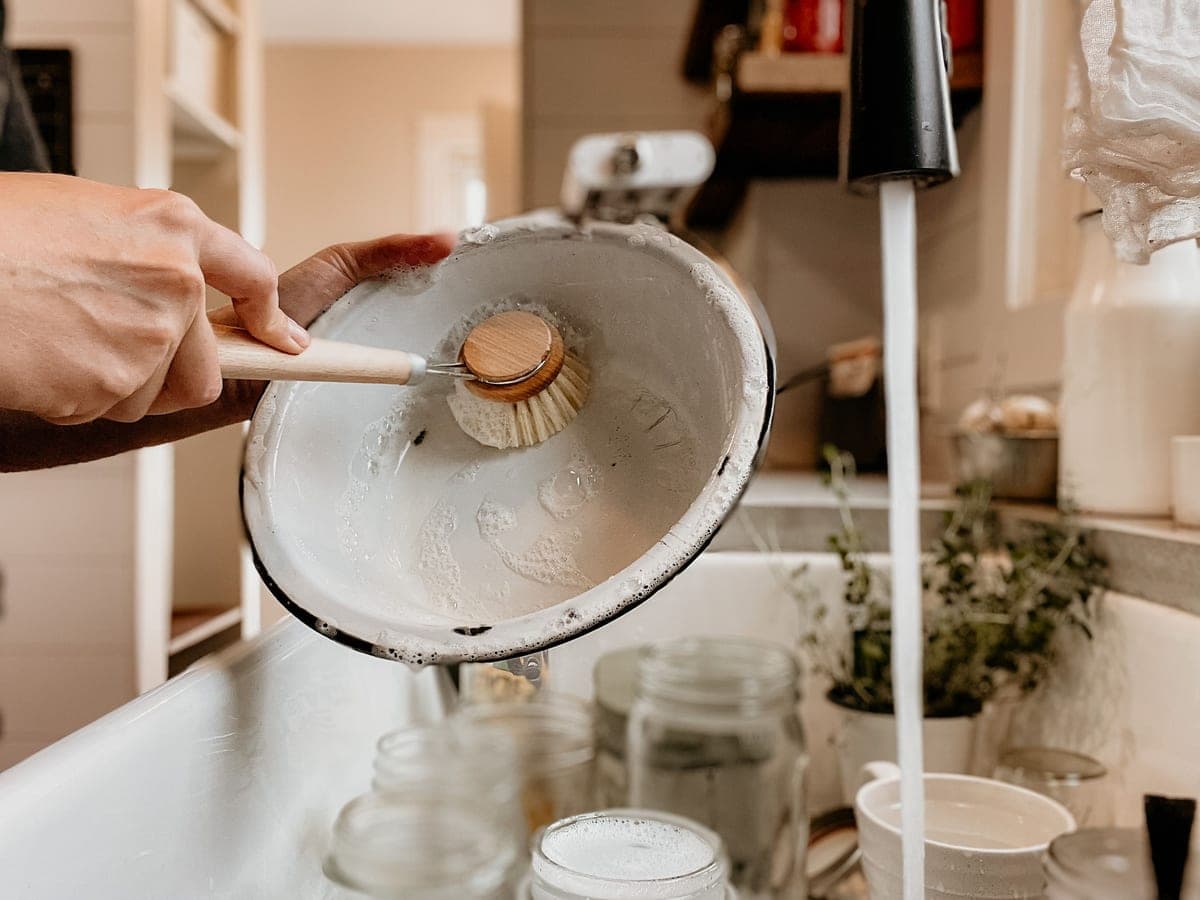
- Brush every surface in hot water. Bottle brush for the reservoir, a smaller brush for the base, and — the step people skip — a port brush inside each feeding port. Ports are where mold starts, because they are warm, sugary and never reached by running water.
- For the weekly deep clean, use vinegar. Clemson recommends a four-to-one vinegar and water solution with a scrub brush. Vinegar is effective, cheap, and leaves no residue that would harm a bird if you under-rinse.
- Rinse thoroughly. Then rinse again. Any cleaning agent left behind ends up in the next batch of nectar.
- Air dry before refilling. Cornell specifically says to allow feeders to air dry before refilling. Standing water dilutes the next fill and gives anything that survived a head start.
Soap, vinegar or bleach
The guidance here is genuinely not unanimous across authorities, so it is worth laying out rather than picking one and pretending.
Hot water and a brush is Cornell’s baseline for nectar feeders, and their guidance specifically advises against using soap or detergent for this.
Vinegar at four parts water to one part vinegar is Clemson’s recommendation for the weekly break-down wash. It handles residue and is forgiving if your rinse is imperfect.
Bleach is an accepted option for sanitizing, with a hard condition attached by everyone who mentions it: rinse off all residue thoroughly and allow the feeder to air dry completely before refilling. Perky-Pet, for its part, recommends mild soap and water at least once a week for its own feeders.
Our practical position: hot water and brushes every change, vinegar weekly, bleach only if you have had a mold problem and want to reset — and then rinse like you mean it. The full comparison is on vinegar vs bleach.
The dishwasher question
Depends on the feeder, and the answer is on the manufacturer’s page rather than in a general rule. First Nature explicitly says its parts should not go in a dishwasher and to use warm soapy water instead. Glass reservoirs usually survive a dishwasher; plastic bases, ports and gaskets often warp.
Even where it is permitted, a dishwasher does not clean inside a feeding port. You still need the brush. We go through what each manufacturer actually publishes in can you put a hummingbird feeder in the dishwasher.
What good looks like
Hold the reservoir up to the light. It should be optically clear with no film. Look into each port: no dark specks, no residue at the narrowing. Run a finger around the inside of the base — it should squeak rather than drag.
One caveat on the reservoir: if your feeder is polycarbonate and a few seasons old, a permanent haze may be UV damage rather than dirt, and no amount of washing removes it. That is the main practical argument for glass over plastic — a hazed reservoir hides the state of what is inside it.
If you find mold
Black specks in the ports or dark growth in the reservoir means stop, and do a full reset rather than a normal wash. That has its own page: cleaning mold out of a hummingbird feeder.
Recommended for this
What we’d buy
1. The kit that does it
Hummingbird Feeder Brush Kit (3-piece)
A bottle brush, a socket brush and a thin port brush. The port brush is the one that matters — it is the only thing that reaches inside a flower port, and a flower port is where mold starts.
photo yet
- Bottle brush
- Typically 13.5" long, 1.5" bristle diameter
- Socket brush
- Typically 8" long, 1" bristle diameter
- Port brush
- Typically 8.25" long, sized for feeding ports
- Bristles
- Nylon — non-scratching on glass and plastic
Our score: 8.7/10 — an editorial rating, not a customer rating or a test result.
Cleaning access
Rinse the brushes when you rinse the feeder and stand them up to dry. A brush stored wet in a drawer grows its own problem.
What works
- The port brush reaches the one surface a sponge and a stream of water never will
- Nylon bristles will not scratch polycarbonate, which is what makes it cloud
- Cheap enough that there is no argument for not owning one
What doesn’t
- Kit contents vary by seller — check the port brush is actually included
- A 13.5" bottle brush will not reach the bottom of a tall 32 oz reservoir
- Bristles wear out; a splayed brush stops reaching into ports
Specifications from Duncraft — Nectar Brush Set and Blue Bird Landing — Hummingbird Feeder Cleaning Brush 3-Piece Kit. We have not handled this feeder — here is what we did instead.
2. The feeder that makes it quick
Aspects HummZinger HighView 12 oz
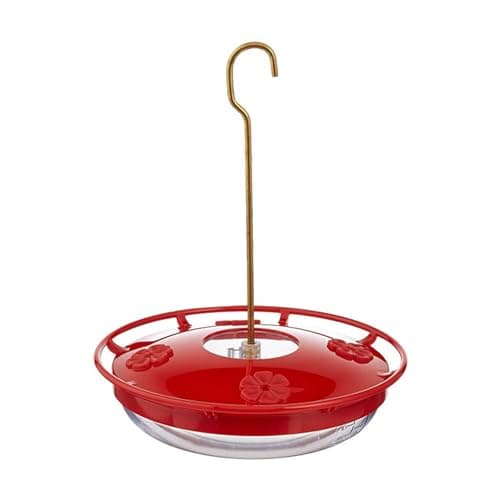
A four-port saucer feeder with the ant moat built into the lid and a cover that lifts straight off — the shortest path from hanging it up to washing it out.
- Type
- Saucer (dish)
- Capacity
- 12 oz
- Feeding ports
- 4
- Material
- Polycarbonate, metal hanger
- Dimensions
- 7.75" x 7.75" x 1.75"
- Ant moat
- Built in
- Perch
- Raised wraparound perch
- Mounting
- Hang or post mount
Our score: 9.3/10 — an editorial rating, not a customer rating or a test result.
Cleaning access
Two parts. The cover lifts off the base with no tools and no threads to cross, and the whole dish is one open bowl — a two-minute wash with a brush and hot water, which is exactly the cadence a nectar feeder needs. The moat is part of the lid, so there is no separate accessory to lose or forget to refill.
What works
- Saucer design puts nectar below the ports, so it does not drip as the air inside warms
- Ant moat is integral to the lid rather than a separate hanging accessory
- Opens to a single shallow bowl — the easiest shape in the category to scrub
- Raised ports shed rain, which keeps the nectar from being diluted
What doesn’t
- 12 oz is small for a busy yard
- Polycarbonate clouds over several seasons in a way glass does not
- No bee-excluding port tips fitted — that is the Ultra's feature, not the HighView's
Specifications from Duncraft — Aspects High View HummZinger and Amazon — Aspects HummZinger HighView 12 oz. We have not handled this feeder — here is what we did instead.
3. Fully disassembling glass
Kingsyard 16 oz Glass Feeder
Six flower ports sized to admit a hummingbird bill and not much else, a thick glass reservoir, and an ant moat in the box — the glass feeder that does not make you buy accessories to finish it.

- Type
- Glass bottle
- Capacity
- 16 oz
- Feeding ports
- 6, flower-shaped
- Material
- Glass reservoir, plastic base
- Ant moat
- Included
- Bee guards
- Ports sized to exclude bees
Our score: 8.4/10 — an editorial rating, not a customer rating or a test result.
Cleaning access
Fully disassembles — reservoir, base and ports all come apart, which is what you want, because a six-port base has six places for residue to sit. The glass reservoir is the easy part; plan on a port brush for the flowers.
What works
- Six ports and a supplied ant moat at a mid-range price
- Glass stays visually clean, so the nectar level and its condition are readable at a glance
- Disassembles completely rather than to two pieces
What doesn’t
- More parts to wash than a saucer, every single time
- Glass and a full 16 oz make for a heavy hang
- Port sizing discourages bees but is not the same as a fitted Nectar-Guard tip
Specifications from Kingsyard — hummingbird feeder range and Amazon — Kingsyard Glass Hummingbird Feeders for Outdoors. We have not handled this feeder — here is what we did instead.
Common questions
Frequently asked
Can you use soap to clean a hummingbird feeder?
Guidance differs. Cornell advises hot water and a bottle brush rather than soap or detergent for nectar feeders; Perky-Pet recommends mild soap and water weekly for its own products. If you do use soap, rinse exhaustively.
What is the vinegar ratio for cleaning a hummingbird feeder?
Four parts water to one part vinegar, per Clemson’s extension guidance, with a scrub brush, for the weekly break-down wash.
Can you put a hummingbird feeder in the dishwasher?
Check the maker’s instruction — First Nature specifically says not to. Glass reservoirs usually cope; plastic bases and ports can warp. And a dishwasher still does not clean inside a feeding port.
Do I need to dry the feeder before refilling?
Yes. Cornell advises allowing feeders to air dry before refilling. Standing water dilutes the next fill and gives anything that survived the wash an easier start.
What is the most important part to clean?
The feeding ports. They are warm, sugary, out of reach of running water, and they are where a bird’s bill and tongue go. A port brush is the only tool that reaches inside them.
Sources
Where this came from
Read next
Related reading
By Scooter M.
an enthusiast who's genuinely into this. I read the manuals, compile the published specs, and do the math. No lab coat.
Published September 1, 2026