Feeders
Are hummingbird feeders worth it?
The honest answer is conditional, and the condition is not money. It is whether you will do a ten-minute job about a hundred times a year.
We earn a commission on purchases made through our links, at no extra cost to you. We don’t accept free products or paid placements. Full disclosure.
Yes — if you will commit to changing the nectar every three to five days, and daily in hot weather. That is the whole condition. A maintained feeder is a genuine good and costs very little. A neglected one ferments and grows mold in the ports, and that does real harm to the birds it attracted. The purchase decision is therefore not really about the feeder’s price — it is about whether you buy one you will actually keep clean.
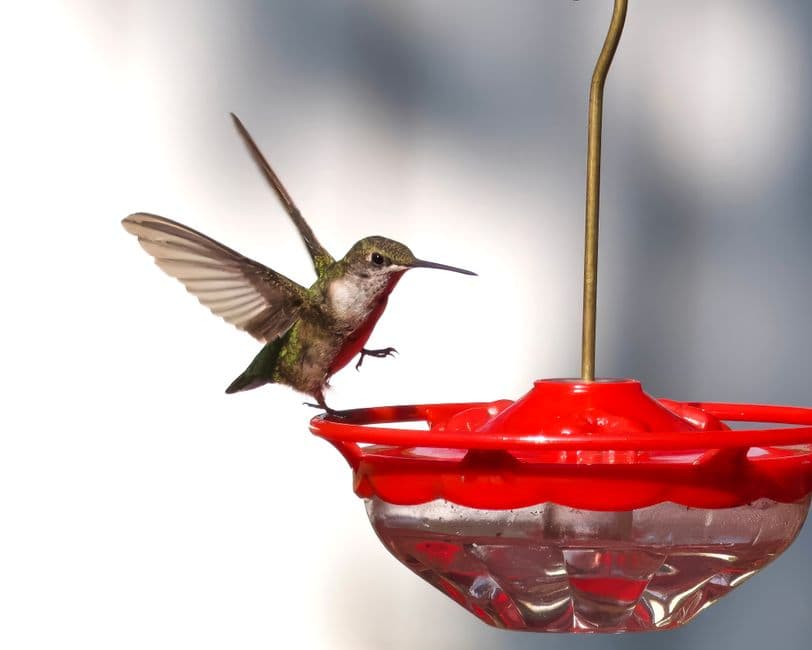
What we recommend here
| # | Product | Best for | Score | Price |
|---|---|---|---|---|
| 1 |  Aspects HummZinger HighView 12 oz Two parts, about two minutes at the sink | The one that makes it worth it | 9.2 out of 10 | |
| 2 |  First Nature 3051 16 oz Bottom of the price range and still cleans properly | If you want to try cheaply first | 8.6 out of 10 | |
| 3 | No product photo yet Hummingbird Feeder Brush Kit (3-piece) The port brush reaches what a rinse never does | The thing that makes the routine stick | 8.4 out of 10 |
Scores are our own editorial ratings from the criteria on our methodology page. They are not customer ratings and they are not test results.
The real cost, itemized
Most “is it worth it” pages answer in dollars. Dollars are the least interesting part of this one.
The feeder. A one-off, and small. The picks above sit in the low-to-mid range of a category where the ceiling is a camera feeder costing ten times as much.
The nectar. Effectively nothing. It is four parts water to one part plain white sugar, mixed at home — a bag of sugar lasts most yards a season. Never honey, never red dye, never a substitute: the recipe and what not to use.
The time. This is the actual price. Empty, disassemble, scrub every surface including inside each port, rinse twice, air dry, refill. Call it five to ten minutes, every three to five days in moderate weather and daily when it is genuinely hot. Across a season that is somewhere between forty and a hundred and fifty repetitions.
Nobody tells you that number before you buy, and it is the number the decision actually turns on. If it sounds fine, a feeder is one of the best-value things you can put in a yard. If reading it made you wince, that is useful information — keep reading.
“Are hummingbird feeders bad for the birds?”
This is the doubt underneath the question, and it deserves a straight answer rather than reassurance.
A clean feeder is not harmful. Sugar water at 4:1 approximates the sucrose concentration of the flowers these birds evolved on. It supplements natural nectar rather than replacing it — hummingbirds still take insects for protein, and a feeder does not make them dependent.
A dirty feeder genuinely is. Warm sugar water ferments and grows black mold, and the ports — the one surface a rinse never reaches — are where it starts. That is not a hypothetical; it is the reason every serious source in this hobby leads with cleaning rather than with product recommendations. See mold in a hummingbird feeder.
And a feeder does not trap anyone. Leaving one up does not delay or prevent migration — hummingbirds migrate on day length, not food supply, and a late feeder can actually help a straggler. We cover that on winter feeding and when to take feeders down.
So the honest framing is not “feeders are good” or “feeders are bad”. It is that a feeder is a commitment you make on the bird’s behalf, and the only bad version is the abandoned one.
Who should not buy one
- Anyone who travels for weeks in summer without someone to take over. A feeder left full through a hot fortnight is the exact failure this page is about. If that is you, plant for hummingbirds instead — it is genuinely a good alternative and needs no schedule.
- Anyone buying it as a decoration. The handsome sealed blown-glass ones are the worst offenders precisely because they are bought to look at rather than to service.
- Anyone who wants it to be low-maintenance. There is no such feeder. There are only faster and slower ones, and the difference between two minutes and ten is the single most useful thing to buy on.
- Anyone in deep winter outside the wintering range. In most of the East the birds have genuinely gone, so there is nothing to feed until spring — when to put feeders out.
What makes it worth it
Everything above is the case against. Here is the case for, stated as plainly.
A hummingbird at two feet is unlike anything else you can arrange from a kitchen window. The entry cost is low, the running cost is sugar, and the wildlife you attract is genuinely wild rather than managed. In most of the country you can go from buying a feeder to having a regular visitor within a couple of weeks of the birds arriving in your region.
And the commitment is real but small. Ten minutes every few days is less than most people spend on a lawn, and unlike the lawn, something arrives to use it.
How to make the answer yes
- Buy for cleaning speed, not capacity. A two-part saucer washes in about two minutes. A sealed bottle takes ten and gets skipped. This is the entire buying decision compressed into one line — see the easiest feeders to clean.
- Buy small and fill it part way. Capacity is not storage; nectar spoils on the weather’s schedule regardless. What size to buy.
- Buy the brush at the same time. Not later. The port brush is what makes the wash quick enough to keep doing.
- Put it where you will see it from a window you use. The visual reminder does more for compliance than good intentions — placement.
- Attach it to an existing habit. Same day each week for the deep clean, plus a change whenever you water the plants.
- Start with one. Prove the routine survives a summer before adding a second — how many you need.
What a realistic first season looks like
People give up on feeders in the first few weeks, and almost always because their expectations were set by somebody else’s photographs. Here is the honest shape of it.
- Weeks one to three: probably nothing. A new feeder is not on any bird’s route and has to be discovered. This is the stage where most people conclude it is not working, and it is simply the stage before it works. Red on the feeder helps; red dye in the nectar is unnecessary and unsafe — why.
- Timing beats patience. Hanging a feeder in July in a northern state means competing with every flower in bloom. Hanging it a week or two before the birds arrive in your region is the single highest-return thing you can do — when to put feeders out and timing by region.
- Then one bird, and it will defend the feeder. A single visitor that chases everything else away is normal, not a problem with your setup. It is also the point at which a second feeder out of sight of the first roughly doubles what you see.
- Midsummer is the test. This is when the heat arrives, the change interval shortens to daily, and the routine either holds or quietly stops. If you are going to abandon a feeder, this is when.
- Late season is the reward. Traffic usually peaks as birds fuel up for migration, which is when the yard is busiest and the feeder feels most worth it.
If none of that sounds off-putting, the answer to the question in the title is yes. If the midsummer line is the one that worries you, read it again — that is the honest decision point.
The cheap way to find out
If you are genuinely unsure, the sensible move is not to buy the nicest feeder — it is to buy a cheap one that still cleans properly and run it for one season. The First Nature 3051 is the pick for exactly that: bottom of the price range, wide-mouth reservoir, base that twists into two pieces. If the routine sticks, upgrade to a saucer and keep the cheap one as a second feeder elsewhere in the yard. If it does not, you have learned something real for very little. More options on the budget roundup.
Recommended for this
What we’d buy
1. The one that makes it worth it
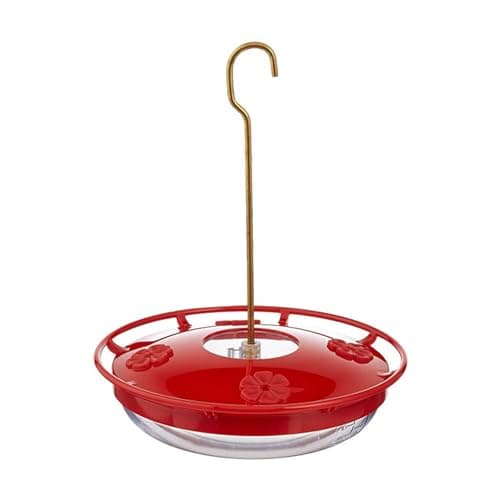
Aspects HummZinger HighView 12 oz
A four-port saucer feeder with the ant moat built into the lid and a cover that lifts straight off — the shortest path from hanging it up to washing it out.
- Type
- Saucer (dish)
- Capacity
- 12 oz
- Feeding ports
- 4
- Material
- Polycarbonate, metal hanger
- Dimensions
- 7.75" x 7.75" x 1.75"
- Ant moat
- Built in
- Perch
- Raised wraparound perch
- Mounting
- Hang or post mount
Our score: 9.2/10 — an editorial rating, not a customer rating or a test result.
Cleaning access
Two parts. The cover lifts off the base with no tools and no threads to cross, and the whole dish is one open bowl — a two-minute wash with a brush and hot water, which is exactly the cadence a nectar feeder needs. The moat is part of the lid, so there is no separate accessory to lose or forget to refill.
What works
- Saucer design puts nectar below the ports, so it does not drip as the air inside warms
- Ant moat is integral to the lid rather than a separate hanging accessory
- Opens to a single shallow bowl — the easiest shape in the category to scrub
- Raised ports shed rain, which keeps the nectar from being diluted
What doesn’t
- 12 oz is small for a busy yard
- Polycarbonate clouds over several seasons in a way glass does not
- No bee-excluding port tips fitted — that is the Ultra's feature, not the HighView's
Price as of September 14, 2026. #ad How we’re funded
Specifications from Duncraft — Aspects High View HummZinger and Amazon — Aspects HummZinger HighView 12 oz. We have not handled this feeder — here is what we did instead.
2. If you want to try cheaply first
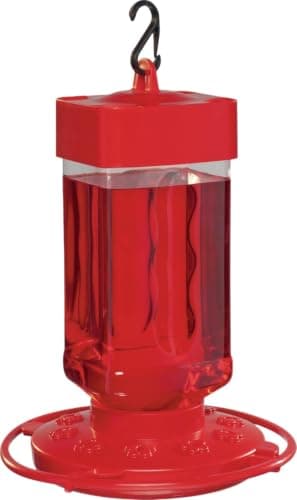
First Nature 3051 16 oz
Ten ports, a wide-mouth reservoir and a base that twists into two pieces — the cheapest feeder in the category that is genuinely easy to clean, which is the only reason it is here.
- Type
- Inverted bottle
- Capacity
- 16 oz
- Feeding ports
- 10
- Material
- Plastic
- Base
- Patented two-part base, twists apart
- Reservoir
- Wide-mouth
- Ant moat
- Built into the base
- Dishwasher
- Not dishwasher safe — warm soapy water
Our score: 8.6/10 — an editorial rating, not a customer rating or a test result.
Cleaning access
Better than the price suggests. The reservoir mouth is wide enough to take a bottle brush without contortions, and the base twists into two pieces so you can reach the underside of the ports — the spot that grows mold first on a cheap bottle feeder. First Nature specifies warm soapy water, not the dishwasher.
What works
- Wide-mouth reservoir takes a standard bottle brush, unlike most budget bottle feeders
- Two-part base opens up the port undersides, which is where mold starts
- Ten ports and an integrated ant moat at the bottom of the category's price range
What doesn’t
- It is an inverted bottle, so it can drip as trapped air warms and pushes nectar out
- Not dishwasher safe, and the thin plastic would not enjoy a hot wash anyway
- Fill all 16 oz in a quiet yard and you will pour most of it away
Price as of September 14, 2026. #ad How we’re funded
Specifications from Amazon — First Nature 10-Port Hummingbird Feeder 3051, 16 oz and Oak Ridge Stores — First Nature FN3051. We have not handled this feeder — here is what we did instead.
3. The thing that makes the routine stick
Hummingbird Feeder Brush Kit (3-piece)
A bottle brush, a socket brush and a thin port brush. The port brush is the one that matters — it is the only thing that reaches inside a flower port, and a flower port is where mold starts.
photo yet
- Bottle brush
- Typically 13.5" long, 1.5" bristle diameter
- Socket brush
- Typically 8" long, 1" bristle diameter
- Port brush
- Typically 8.25" long, sized for feeding ports
- Bristles
- Nylon — non-scratching on glass and plastic
Our score: 8.4/10 — an editorial rating, not a customer rating or a test result.
Cleaning access
Rinse the brushes when you rinse the feeder and stand them up to dry. A brush stored wet in a drawer grows its own problem.
What works
- The port brush reaches the one surface a sponge and a stream of water never will
- Nylon bristles will not scratch polycarbonate, which is what makes it cloud
- Cheap enough that there is no argument for not owning one
What doesn’t
- Kit contents vary by seller — check the port brush is actually included
- A 13.5" bottle brush will not reach the bottom of a tall 32 oz reservoir
- Bristles wear out; a splayed brush stops reaching into ports
Specifications from Duncraft — Nectar Brush Set and Blue Bird Landing — Hummingbird Feeder Cleaning Brush 3-Piece Kit. We have not handled this feeder — here is what we did instead.
Common questions
Frequently asked
Are hummingbird feeders worth it?
Yes, if you will change the nectar every three to five days and daily in hot weather. The cost that matters is time, not money — roughly five to ten minutes, forty to a hundred and fifty times a season. A maintained feeder is excellent value; a neglected one does harm.
Are hummingbird feeders bad for hummingbirds?
A clean one is not. Sugar water at 4:1 supplements natural nectar and does not make birds dependent. A dirty one genuinely is harmful, because warm sugar water ferments and grows mold inside the feeding ports.
How much work is a hummingbird feeder really?
Five to ten minutes per change — empty, disassemble, scrub every surface including inside the ports, rinse, dry, refill — every three to five days, daily in heat. Buying a two-part saucer rather than a sealed bottle roughly halves it.
Do hummingbird feeders make birds dependent or stop them migrating?
No to both. Hummingbirds take insects for protein and use natural nectar alongside a feeder, and migration is triggered by day length rather than food supply — a feeder left up can actually help a late straggler.
What is the cheapest way to try hummingbird feeding?
Buy an inexpensive feeder that still comes apart properly and run it for one season. If the cleaning routine sticks, upgrade and keep the cheap one as a second feeder elsewhere in the yard.
Sources
Where this came from
Read next
Related reading
By Scooter M.
an enthusiast who's genuinely into this. I read the manuals, compile the published specs, and do the math. No lab coat.
Published September 13, 2026