Feeders
The best hummingbird feeders for hot weather
Heat turns this from a buying decision into a maintenance decision, and almost every feeder sold on capacity is the wrong answer.
We earn a commission on purchases made through our links, at no extra cost to you. We don’t accept free products or paid placements. Full disclosure.
The Aspects HummZinger HighView is the pick for a hot climate. Not because it holds more — because it holds less and comes apart in two pieces. Above about 90 degrees the nectar in any feeder needs changing daily, so the feeder you want is the one you can empty, scrub and refill in two minutes without resenting it. Capacity is the enemy here, not the feature.
Quick picks
| # | Product | Best for | Score | Price |
|---|---|---|---|---|
| 1 |  Aspects HummZinger HighView 12 oz 12 oz, two parts, lid lifts straight off | Best for hot weather overall | 9.2 out of 10 | |
| 2 |  Perky-Pet 217 Window Mount 8 oz 8 oz — emptied before it can spoil | Smallest sensible capacity | 7.9 out of 10 | |
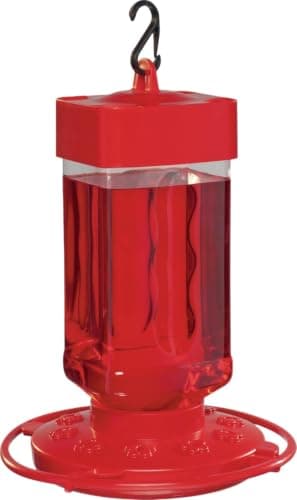
| 3 | 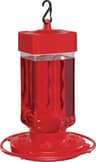 First Nature 3051 16 oz Wide mouth takes a brush without a fight | Best budget pick for heat | 8.6 out of 10 | |
| 4 | No product photo yet Hummingbird Feeder Brush Kit (3-piece) A daily wash is a port brush or it is nothing | Buy it in the same order | 8.4 out of 10 |
Scores are our own editorial ratings from the criteria on our methodology page. They are not customer ratings and they are not test results.
How we judged these
We have not tested these feeders in a heatwave or anywhere else, and that is the reason to read this rather than the pages that claim they did. What we did instead: compiled published manufacturer and retailer specifications, read what each maker says about disassembly and about heat, and weighted the criteria below against what actually happens to sugar water at temperature. The method is on our methodology page.
The criteria, in the order they matter in a hot climate:
- How fast it comes apart. Weighted hardest, because in heat the wash is daily rather than every few days. A feeder that takes ten minutes gets cleaned weekly no matter what you intend.
- Capacity, judged downward. Smaller is better. The right size is the one your birds empty at about the rate the nectar would spoil anyway.
- Whether it drips. Heat is what makes a bottle feeder leak — warm air in the reservoir expands and pushes nectar out of the ports. Drips on a hot surface ferment and recruit insects within hours.
- What the maker says about hot water. Thin plastic deforms, and a warped base does not seat, and a feeder that does not seat leaks.
- Whether it can sit in shade. Mounting flexibility is worth more in July than in May.
What heat actually does to nectar
The change interval is not a tidiness rule, it is a spoilage clock, and temperature sets it. The Smithsonian’s National Zoo recommends feeders be changed and thoroughly cleaned every other day, and at minimum twice a week in summer and once a week in cooler weather. Cornell puts the general rule at every three to five days and says to do it more frequently in hot weather. Perky-Pet, writing as a manufacturer, says food should be replaced every 3 to 5 days and that in the height of summer every few days may be necessary.
Our own working schedule, and the one the rest of this site uses: every three to five days in moderate weather, daily once it is properly hot or the feeder catches afternoon sun. The full breakdown is on how often to clean a hummingbird feeder.
Two things follow from that, and they are the whole basis of this page. First, in a hot climate you will perform this task something like a hundred and fifty times a season, so the minutes matter enormously. Second, buying capacity to reduce the number of trips outside does not work — you still go out daily, you just throw away more each time.
1. Aspects HummZinger HighView — best for hot weather
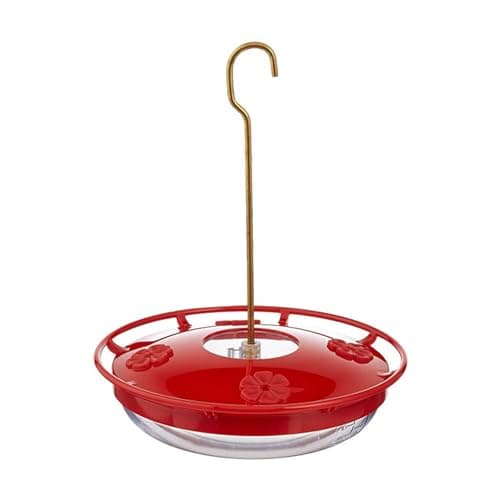
Aspects publishes it as item 429: 12 oz, four ports, UV-stabilized polycarbonate, an integrated wraparound perch, a built-in ant moat, raised flowers that divert rain, hang or post mount, and a lifetime guarantee.
It wins on the criterion we weighted hardest. The cover lifts off and you wash one open shallow bowl — no threads, no narrow neck, no separate moat to refill. On a daily cycle that difference compounds into hours over a season. The saucer design also means it structurally cannot drip as the air inside warms, which is the specific failure mode heat causes in bottle feeders.
Twelve ounces is the right size for most yards in heat: enough to matter, small enough that you are not pouring away a pint every morning.
Honest cons: 12 oz is genuinely small if you have heavy traffic; the polycarbonate clouds after a few seasons of sugar water and UV, and strong sun accelerates that; and no bee-guard tips are fitted, which matters because heat brings insects. If bees arrive, the HummZinger Ultra is the same body with Nectar-Guard tips. Full write-up: the HighView review.
2. Perky-Pet 217 — the smallest sensible capacity
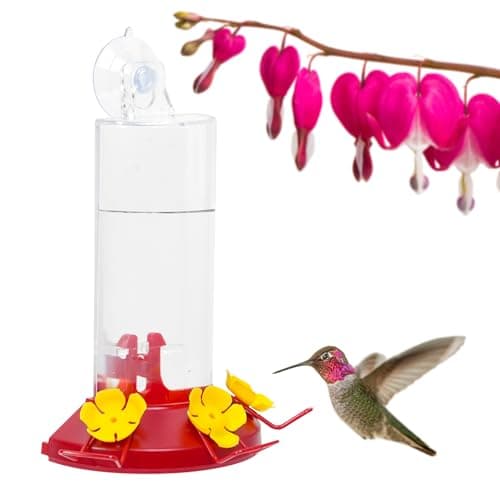
Eight ounces, three tapered ports, three detachable perches, shatter-resistant plastic, 8.4 x 5.5 x 3.5 inches, mounted by suction cup or hung from a nail. Perky-Pet’s own selling point is that it comes apart completely, perches included.
In a hot climate a small feeder is not a compromise, it is the point. Eight ounces gets emptied or changed before it has time to go off, and being on the window means you actually notice when it needs doing — the visual reminder is worth more than it sounds when the job is daily.
Honest cons: suction cups fail in exactly the conditions this page is about, because heat cycling is what breaks the seal — clean the glass with rubbing alcohol and re-check after the first hot week. Glass on a sunny wall also gets hot, which speeds spoilage further, so a shaded aspect matters more for this one than for any other pick. And it is plastic, so it clouds. More in the window feeder roundup.
3. First Nature 3051 — best budget pick for heat
Sixteen ounces, ten ports, a wide-mouth jar reservoir and a base that twists apart into two pieces. First Nature states it is manufactured in America from a durable polymer, and the base carries a sealing ring intended to stop the nectar dripping.
It earns its place here on the wide mouth. On a daily wash the thing that slows you down is reaching inside the reservoir, and this one takes a standard bottle brush without contortions — unusual at this price. Ten ports also spreads out the traffic you get when heat brings birds in numbers.
Honest cons: it is an inverted bottle, so it is the design most likely to drip as trapped air warms — the sealing ring helps but it is a seal working against physics. First Nature explicitly says not to use scalding water or a dishwasher because the parts can deform, which is a real constraint when you are washing daily and tempted to speed it up with heat. And 16 oz is more than most yards should be filling; fill it part way. See the 3051 review and what each maker says about the dishwasher.
4. A brush kit — the pick people skip and then regret
A bottle brush, a socket brush and a thin port brush. The port brush is the one that matters: the inside of a feeding port is the one surface a rinse never reaches and the place mold starts, and in heat it starts fast.
We list it as a pick rather than an afterthought because on a daily schedule the difference between owning one and not owning one is whether the routine survives July. Nylon bristles also will not scratch polycarbonate, and scratches are part of why plastic clouds.
Honest cons: kit contents vary by seller, so check the port brush is actually included; bristles splay with use and a splayed brush stops reaching into ports; and a 13.5-inch bottle brush will not reach the bottom of a tall 32 oz reservoir — one more reason not to buy one of those. Full detail on the brush roundup.
Placement matters more in heat than the feeder does
You can undo a good purchase with a bad hook. A feeder in full afternoon sun cooks its own contents, and the spoilage clock runs on the temperature of the nectar rather than the temperature of the air.
- Morning sun, afternoon shade. The single highest-value adjustment, and it is free. In winter you want the opposite — see winter feeding.
- Under an eave or inside a tree canopy rather than out on an open shepherd’s hook, if the choice exists.
- Fill it part way. Half-filling a 12 oz feeder in a quiet yard is not wasteful, it is correct — the schedule does not care how much is in there.
- Two small feeders in different aspects beats one in the wrong spot, and it reduces the territorial fighting that gets worse when birds are stressed. See how many feeders you need.
- Rinse at the same time every day so it becomes a habit rather than a decision. The method is on how to clean a hummingbird feeder.
The signs you are already behind
Cloudy nectar, a slippery film on the base, black specks around the ports, or bees and ants suddenly arriving in numbers. Any of those means the interval is too long for your conditions, not that you need a different feeder. Take it out of service, break it down, scrub with a port brush, soak in a 4:1 vinegar solution and rinse exhaustively — the mold page has the full procedure.
Fermented nectar and port mold are what actually harm hummingbirds, and heat is simply the accelerant. That is why this page ranks a 12 oz feeder above a 32 oz one and does not apologize for it.
The picks in full
Every pick, in detail
1. Best for hot weather overall
Aspects HummZinger HighView 12 oz
A four-port saucer feeder with the ant moat built into the lid and a cover that lifts straight off — the shortest path from hanging it up to washing it out.
- Type
- Saucer (dish)
- Capacity
- 12 oz
- Feeding ports
- 4
- Material
- Polycarbonate, metal hanger
- Dimensions
- 7.75" x 7.75" x 1.75"
- Ant moat
- Built in
- Perch
- Raised wraparound perch
- Mounting
- Hang or post mount
Our score: 9.2/10 — an editorial rating, not a customer rating or a test result.
Cleaning access
Two parts. The cover lifts off the base with no tools and no threads to cross, and the whole dish is one open bowl — a two-minute wash with a brush and hot water, which is exactly the cadence a nectar feeder needs. The moat is part of the lid, so there is no separate accessory to lose or forget to refill.
What works
- Saucer design puts nectar below the ports, so it does not drip as the air inside warms
- Ant moat is integral to the lid rather than a separate hanging accessory
- Opens to a single shallow bowl — the easiest shape in the category to scrub
- Raised ports shed rain, which keeps the nectar from being diluted
What doesn’t
- 12 oz is small for a busy yard
- Polycarbonate clouds over several seasons in a way glass does not
- No bee-excluding port tips fitted — that is the Ultra's feature, not the HighView's
Price as of September 14, 2026. #ad How we’re funded
Specifications from Duncraft — Aspects High View HummZinger and Amazon — Aspects HummZinger HighView 12 oz. We have not handled this feeder — here is what we did instead.
2. Smallest sensible capacity
Perky-Pet 217 Window Mount 8 oz
Eight ounces, three tapered ports, three detachable perches, and it comes apart completely — a window feeder that does not punish you for putting it where you have to look at it every day.
- Type
- Window mount
- Capacity
- 8 oz
- Feeding ports
- 3, tapered
- Perches
- 3, detachable
- Material
- Shatter-resistant plastic
- Dimensions
- 8.4"H x 5.5"W x 3.5"D
- Mounting
- Suction cup, or hang from a nail
Our score: 7.9/10 — an editorial rating, not a customer rating or a test result.
Cleaning access
Perky-Pet's own description is the selling point: it comes apart completely. Detachable perches and removable ports mean nothing is sealed shut, which matters more on a window feeder than anywhere else — it is at eye level, so a grubby one is impossible to ignore.
What works
- Fully disassembles, perches included
- Tapered ports are shaped to make it harder for bees to reach the nectar
- 8 oz is honestly sized for a window feeder — you will empty it before it spoils
What doesn’t
- Suction cups let go in heat and cold; check it after the first hot week
- A feeder on the glass raises the collision question — see our placement guide
- Plastic, so it will cloud over a few seasons
Price as of September 14, 2026. #ad How we’re funded
Specifications from Perky-Pet — Window Mount Plastic Hummingbird Feeder (217) and Amazon — Perky-Pet 217 Window Mount Hummingbird Feeder. We have not handled this feeder — here is what we did instead.
3. Best budget pick for heat
First Nature 3051 16 oz
Ten ports, a wide-mouth reservoir and a base that twists into two pieces — the cheapest feeder in the category that is genuinely easy to clean, which is the only reason it is here.
- Type
- Inverted bottle
- Capacity
- 16 oz
- Feeding ports
- 10
- Material
- Plastic
- Base
- Patented two-part base, twists apart
- Reservoir
- Wide-mouth
- Ant moat
- Built into the base
- Dishwasher
- Not dishwasher safe — warm soapy water
Our score: 8.6/10 — an editorial rating, not a customer rating or a test result.
Cleaning access
Better than the price suggests. The reservoir mouth is wide enough to take a bottle brush without contortions, and the base twists into two pieces so you can reach the underside of the ports — the spot that grows mold first on a cheap bottle feeder. First Nature specifies warm soapy water, not the dishwasher.
What works
- Wide-mouth reservoir takes a standard bottle brush, unlike most budget bottle feeders
- Two-part base opens up the port undersides, which is where mold starts
- Ten ports and an integrated ant moat at the bottom of the category's price range
What doesn’t
- It is an inverted bottle, so it can drip as trapped air warms and pushes nectar out
- Not dishwasher safe, and the thin plastic would not enjoy a hot wash anyway
- Fill all 16 oz in a quiet yard and you will pour most of it away
Price as of September 14, 2026. #ad How we’re funded
Specifications from Amazon — First Nature 10-Port Hummingbird Feeder 3051, 16 oz and Oak Ridge Stores — First Nature FN3051. We have not handled this feeder — here is what we did instead.
4. Buy it in the same order
Hummingbird Feeder Brush Kit (3-piece)
A bottle brush, a socket brush and a thin port brush. The port brush is the one that matters — it is the only thing that reaches inside a flower port, and a flower port is where mold starts.
photo yet
- Bottle brush
- Typically 13.5" long, 1.5" bristle diameter
- Socket brush
- Typically 8" long, 1" bristle diameter
- Port brush
- Typically 8.25" long, sized for feeding ports
- Bristles
- Nylon — non-scratching on glass and plastic
Our score: 8.4/10 — an editorial rating, not a customer rating or a test result.
Cleaning access
Rinse the brushes when you rinse the feeder and stand them up to dry. A brush stored wet in a drawer grows its own problem.
What works
- The port brush reaches the one surface a sponge and a stream of water never will
- Nylon bristles will not scratch polycarbonate, which is what makes it cloud
- Cheap enough that there is no argument for not owning one
What doesn’t
- Kit contents vary by seller — check the port brush is actually included
- A 13.5" bottle brush will not reach the bottom of a tall 32 oz reservoir
- Bristles wear out; a splayed brush stops reaching into ports
Specifications from Duncraft — Nectar Brush Set and Blue Bird Landing — Hummingbird Feeder Cleaning Brush 3-Piece Kit. We have not handled this feeder — here is what we did instead.
What we’d skip
Any 32 oz feeder bought for a hot climate
This is the single most expensive mistake in the category and heat makes it worse, not better. The logic people use — it is hot, the birds drink more, buy bigger so I refill less — is backwards, because the limit is not how fast the birds empty it but how fast the sugar water goes off. In real heat that is a day. A 32 oz feeder in a hot yard means pouring away most of a batch every single morning, and washing a tall reservoir a short brush will not reach while you do it. If you genuinely have the traffic to justify volume, add a second small feeder somewhere else instead.
Common questions
Frequently asked
How often should you change hummingbird nectar in hot weather?
Daily once it is properly hot or the feeder catches afternoon sun. Cornell says to change every three to five days generally and more frequently in heat; the Smithsonian recommends a change and thorough clean every other day, and at least twice a week in summer.
Should I buy a bigger feeder for a hot climate?
No — buy smaller. The limit is how fast nectar spoils, not how fast birds drink it, so a large feeder in heat just means pouring more away each morning. If you have the traffic to justify volume, add a second small feeder elsewhere instead.
Do hummingbird feeders leak more in hot weather?
Inverted bottle feeders do. Warm air in the reservoir expands and pushes nectar out through the ports. A saucer feeder holds the nectar below the ports and structurally cannot do this, which is why the top picks here are saucers.
Can I use hot water to speed up cleaning in summer?
Check your model first. First Nature explicitly warns that scalding water or a dishwasher may deform its parts, and a warped base leaks. Hot tap water with a mild soap and a port brush is the safe default.
Sources
Where this came from
Read next
Related reading
By Scooter M.
an enthusiast who's genuinely into this. I read the manuals, compile the published specs, and do the math. No lab coat.
Published September 13, 2026